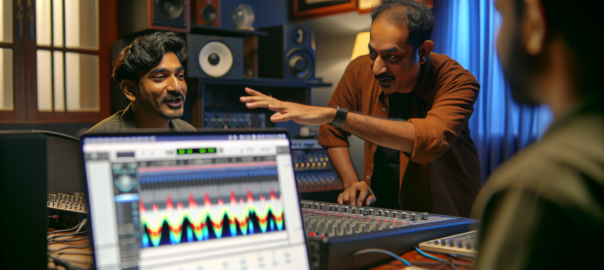
AI for Artists: stop chasing prompts; learn how intuition and modern models unlock new creative tools and workflows.
AI is not a magic shortcut. It’s an instrument. Short-term tricks fade as models evolve. Artists who learn the mindset win. This guide pulls practical lessons from Carlo Kiksen’s piece and the shifting AI landscape. If you loved experiments like AI Creates Revolutionary Dance Music Genre, you’ll want a framework to use AI beyond flashy prompts. Read on to learn what matters now, what will matter next year, and how to turn curiosity into real creative advantage.
I grew up singing in opera houses and learning stages where technology felt foreign. I once recorded vocals that landed on a Madonna track and later tinkered with microcontrollers at Stanford CCRMA. That blend—classical stage nerves and DIY tech curiosity—made me skeptical of quick AI hacks. I prefer treating models like instruments: test, tune, and sometimes break them to hear something new. That mix of performance grit and tinkering is how I approach AI for Artists.
AI for Artists
We’re at a turning point like the early 1980s synthesizer debate. Back then, unions feared job loss. Today, headlines scream theft or miracle. Carlo Kiksen’s essay argues that the right response is understanding capability, failure modes, and direction. He points out concrete markers: early 2025 required prompt engineering hacks; by 2026 models like Gemini and Claude pushed past ChatGPT in quality; and even a screenshot noted an image “Generated with Gemini 2.5 Flash.” Those are not trivia — they signal rapid platform churn.
Know the tech versus the interface
Distinguish LLM capability from product UI. Tools (ChatGPT, Gemini, Claude, MidJourney, Runway) change fast. Underlying generative tech improves on compute and data. For artists, that means the skill to read output, spot hallucinations, and steer creative intent is more valuable than memorizing prompts. The article embedded at Hypebot notes this explicitly: master the mindset, not the tool.
Practical moves that matter
Start by creating, not optimizing. Use a model daily to compose sketches, stems, or visual ideas. Experiment with tools beyond ChatGPT — Kiksen recommends Google Gemini — and track differences. He warns models are trained on copyrighted music and calls the current state a “massive ethical and legal failure.” That means document your prompts, avoid undisclosed dataset hacks, and favor models with transparent licensing. Expect tools to flip in months: a platform leading today might be obsolete by January 2027.
Get measurable about intuition
Build simple metrics: time-to-idea (minutes), usable-outputs-per-hour, and novelty-score (subjective). Use those to compare tools, not fandom. Treat AI as a teammate: it needs direction, taste, and curation. Artists who develop AI intuition — knowing where a model hallucinates, how it replicates copyrighted patterns, and where it surprises — will lead the next wave of genre shifts, much like synth pioneers did decades ago.
Ethics and career strategy
Don’t hide from ethics. A refusal to engage is a career risk. Yet blindly using any output is risky too. Push for better rights deals and transparent training data while experimenting. The balanced path is active engagement: create original work, insist on fair licensing, and help shape norms so AI becomes an instrument that augments, not erases, human artistry.
AI for Artists Business Idea
Product: “MuseStudio” — an integrated creative platform combining adaptable generative models, provenance tracking, and rights-aware output tagging. MuseStudio offers modular audio and text generation tuned for musicians, plus a credit system that transparently records dataset provenance and royalty flags. Target market: indie musicians, producers, small labels, and composer-for-hire studios (100,000+ potential users in English-speaking markets).
Service: subscription tiers ($9–$49/month), pay-per-render credits for commercial releases, and an enterprise API for labels. Additional revenue from an optional marketplace that connects artists with vetted AI curators and legal clearance services (15% commission on placements).
Why now: models and tooling are shifting fast; artists need stability, provenance, and legal clarity. By combining creative workflows with rights metadata and clear licensing, MuseStudio meets artists where they already work while turning ethical transparency into a competitive moat. This reduces legal risk for labels and unlocks new revenue streams tied to AI-assisted compositions.
New Instruments, New Culture
AI will reshape creation, but artists set the tone. Treat models as instruments, not oracles. Invest in intuition, document your process, and demand transparency from platforms. The future favors creators who experiment responsibly today. What unexpected sound or workflow could you unlock if you treated AI like a new instrument this week?
FAQ
What does AI for Artists mean?
AI for Artists describes tools and practices where generative models assist songwriting, sound design, visuals, and workflow automation. It emphasizes creative direction, curation, and ethical use rather than blind reliance on prompts.
Which tools should artists learn beyond ChatGPT?
Explore Google Gemini, Claude, Mistral, MidJourney, and Runway. Models evolve quickly; aim to master concepts (prompt framing, output curation, provenance) rather than any single product.
How can I protect my rights when using AI-generated content?
Document prompts, choose platforms with transparent dataset policies, and negotiate licensing for commercial releases. Track provenance metadata and consider legal counsel for samples or derivative works.