Category Archives: Music Tech News

All the hot news on music technology from around the world.

UK's controversial AI copyright proposal faces opposition from major artists including Paul McCartney. Find out what's at stake for creators.

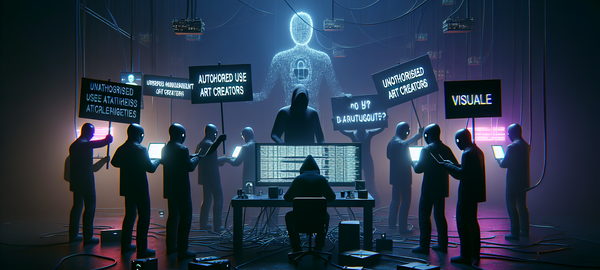
Artists Unite Against Copyright-Free AI Training

Major artists are rallying against AI’s unrestricted use of copyrighted content.

The battle over AI training using copyrighted content has reached a critical point. As revealed in my recent coverage of Paul McCartney’s stance against AI exploitation, artists worldwide are uniting to protect their creative rights. The UK government’s latest proposal has ignited fierce debate about the future of artistic ownership.

As a composer who’s spent countless hours crafting original pieces, I understand the sanctity of creative work. Last year, I discovered an AI-generated track that eerily mimicked my vocal style from a performance at Stanford’s CCRMA. That moment crystallized my understanding of why copyright protection matters so deeply.

Shape Tomorrow’s Creative Landscape

The future of artistic expression hangs in the balance. As creators and consumers, we must carefully consider how AI integration affects the creative ecosystem. What role will you play in protecting artistic rights? Share your thoughts on balancing innovation with creative protection – your voice matters in this crucial conversation.


Quick FAQ Guide

What is the UK government proposing about AI and copyright?

The UK government is considering allowing tech companies to train AI on copyrighted content without permission, though creators would have an opt-out option.

How many artists have opposed this proposal?

Over 37,000 creators have signed the Statement On AI Training, including major artists like Thom Yorke, Kate Bush, and Robert Smith.

What are the potential impacts on artists?

Artists could face unauthorized use of their work in AI training, potentially affecting their creative control and income streams from licensing.


French music instruments innovator Joué Music closes its doors despite international success, leaving a legacy of award-winning controllers

Award-Winning Music Instruments Face Heartbreaking Farewell

Beloved music instruments creator Joué Play bids farewell, leaving musicians worldwide heartbroken.

In a shocking turn of events that’s sending ripples through the music technology world, innovative French music instruments maker Joué Music announces its closure. This comes just as the industry was seeing revolutionary strides in music creation tools, making the loss even more significant.

As a performer who’s explored countless music instruments throughout my career, this news hits close to home. I remember testing the Joué Play at CCRMA, marveling at how it bridged the gap between traditional expression and digital innovation – much like my own journey from opera stages to tech-enhanced performances.

The Fall of an Innovative Music Instruments Pioneer

Joué Music’s announcement has sent shockwaves through the industry. Founded in 2016 by Pascal Joguet, they revolutionized MIDI controllers with their innovative approach to music instruments.

Their flagship product, the Joué Play, earned an impressive 9/10 rating for its premium finish and affordability. It offered beginners an engaging platform while providing professionals access to MPE functionality at an unprecedented price point.

Despite two years of international success and multiple awards, the company couldn’t achieve financial sustainability. Their team – Arnaud, Emmanuel, Marjorie, Pascal, and Sebastien – fought valiantly through challenging times before making this difficult decision.

The Future of Expressive Music Instruments

While Joué Music’s departure leaves a void in the music technology landscape, their legacy lives on through the countless musicians they’ve inspired. What innovative music instruments have shaped your creative journey? Share your experiences and let’s keep the spirit of musical innovation alive. Together, we can ensure that groundbreaking ideas continue to transform how we make music.


Quick FAQ

Q: What happened to Joué Music?
A: Joué Music, the French music instruments company, is shutting down due to financial sustainability issues, despite two years of strong growth.

Q: What was special about the Joué Play?
A: The Joué Play was an innovative MIDI controller that combined traditional instrument expressiveness with digital music production, earning a 9/10 rating.

Q: Will Joué Play continue to work?
A: While existing Joué Play devices will continue to function, the company will no longer provide support or updates for their music instruments.

Paul McCartney leads fight against artificial intelligence exploitation in music, as Big Tech pushes controversial opt-out AI policies.

Paul McCartney Fights AI Music Exploitation

A legendary Beatle stands up against Big Tech’s artificial intelligence exploitation.

The battle between artists and artificial intelligence reaches new heights as tech giants push controversial opt-out policies. With the music industry facing unprecedented challenges, as we’ve seen in the recent industry evolution storm, artists are taking a bold stand against unauthorized AI training.

As a composer and performer, I’ve witnessed firsthand how AI impacts our creative process. During a recent recording session at Stanford’s CCRMA, we discovered our experimental soundscapes were being scraped by AI models without consent – a stark reminder of the challenges we face in protecting our artistic integrity.

Artificial Intelligence Threatens Artists’ Rights

McCartney is leading the charge against Big Tech’s controversial ‘opt-out’ AI policies. In a powerful statement to Hypebot, he warns that AI ‘could just take over’ if left unchecked.

The situation is particularly alarming as companies like Google have already been transcribing YouTube videos for AI training without explicit permission. This practice has potentially violated countless copyrights, while tech giants continue pushing for policies that would legitimize their actions.

The impact extends globally, with eight countries announcing AI policy initiatives in 2024 alone. Eric Schmidt, dubbed ‘Uncle Sugar,’ has openly bragged about writing Biden’s AI Executive Order and influencing UK policy, revealing the coordinated effort to shape AI regulations in Big Tech’s favor.

Shape Tomorrow’s Music Together

The future of music creation hangs in the balance, and your voice matters more than ever. Whether you’re a creator, performer, or passionate listener, now’s the time to join the conversation about AI’s role in music. Share your thoughts on protecting artistic rights while embracing innovation. How do you envision the perfect balance between AI advancement and artistic integrity?


Quick FAQ on AI Music Rights

Q: How does AI music scraping affect artists?
A: AI scraping allows companies to use artists’ work without permission or compensation for training AI models, potentially threatening their creative control and income.
Q: What is the ‘opt-out’ AI policy?
A: It’s a controversial approach where artists must actively request exclusion from AI training, rather than companies seeking permission first.
Q: Who’s leading the fight against AI music exploitation?
A: Paul McCartney, along with major artists and industry leaders, is actively opposing unconsented AI use of musical works.
Discover Tracklib's game-changing desktop app that revolutionizes free music sampling with instant access to over 100,000 tracks

Tracklib Revolutionizes Free Music Creation

Imagine dragging pristine free music samples directly into your masterpiece with zero hassle.

The landscape of music creation is evolving rapidly, with producers seeking seamless ways to integrate samples into their work. Following the recent industry-wide push for ethical music creation, Tracklib’s new desktop app emerges as a game-changing solution for producers worldwide.

As a performer who’s spent countless hours in professional studios, I’ve witnessed firsthand the tedious process of sample clearing. Last month, while working on a track at Stanford’s CCRMA, I found myself wishing for a simpler way to integrate samples. That’s when I first discovered Tracklib’s revolutionary approach.

Unleash Your Creativity with Tracklib’s Sample Revolution

The new Tracklib desktop app is transforming how producers access and use free music samples. With instant access to over 100,000 tracks, the Beta release handles all the technical heavy lifting – from metadata to beat markers.

Every aspect of the workflow has been streamlined for maximum creativity. You can explore sounds, create custom loops, adjust pitch, and simply drag-and-drop samples directly into your DAW. The platform’s extensive library spans from vintage 70s vocals to modern 808 drum hits.

Tracklib’s CEO Andreas Ahlenius emphasizes their mission to remove creative barriers, while Chairman Andreas Liffgarden hints at exciting future developments. Earlier this year, they launched ‘Sounds,’ expanding their offering with authentic royalty-free loops and one-shots.

Transform Your Production Game

Ready to revolutionize your music production workflow? Tracklib’s desktop app represents more than just a new tool – it’s your gateway to limitless creative possibilities. Whether you’re a bedroom producer or studio veteran, this could be the missing piece in your creative arsenal. What sample will inspire your next hit? Share your thoughts below!


Quick FAQ

Q: How many tracks does Tracklib’s library contain?
A: Tracklib’s library provides access to over 100,000 tracks and samples, including both original songs and royalty-free sounds.

Q: Do I need a subscription to use Tracklib’s desktop app?
A: Yes, you need a Tracklib subscription, but new users can start with a trial to test the platform.

Q: Can I adjust the samples before using them?
A: Yes, you can create custom loops, adjust pitch, and modify samples directly within the app before dropping them into your DAW.

Explore how AI is transforming the music industry through automated moderation, AI-generated content, and revolutionary streaming platform changes

AI Unleashes Music Industry Evolution Storm

The music industry faces its biggest transformation as artificial intelligence rewrites the rules of creation.

While some fear AI’s impact on music creation, others see unprecedented opportunities. Just like we’ve seen with recent industry disruptions, this technological wave is reshaping how artists create, distribute, and monetize their work. From AI-generated tracks to automated content moderation, the landscape is evolving rapidly.

As a performer who’s worked with Madonna and appeared at the Royal Opera House, I’ve witnessed firsthand how technology transforms music production. Recently, I experimented with AI vocal harmonization at Stanford’s CCRMA, and the results were both fascinating and slightly unnerving – like hearing a digital twin of myself singing perfect harmonies!

Shape Tomorrow’s Sound Today

The music industry stands at a crossroads where technology and creativity collide in unprecedented ways. Whether you’re an artist, producer, or music enthusiast, your voice matters in shaping this evolution. How do you envision the future of music creation? Share your thoughts on AI’s role in music – let’s create tomorrow’s soundscape together.


Quick Music Industry FAQ

Q: How is AI affecting music creation?
A: AI is transforming music creation through automated composition, mastering, and distribution tools. Currently, AI can generate complete songs and assist with mixing and mastering.

Q: Will AI replace human musicians?
A: No, AI is primarily enhancing rather than replacing human creativity. It serves as a tool for musicians, similar to how digital audio workstations augment traditional instruments.

Q: How are streaming platforms adapting to AI?
A: Platforms like Spotify are implementing AI for content moderation, playlist curation, and developing new features like video integration, reporting an 88% increase in video content consumption.

iOS 18 revolutionizes mobile music creation with new Layered Recordings feature, transforming Voice Memos into a pro-level recording studio.

iOS 18 Revolutionizes Mobile Music Creation

iOS 18 transforms your iPhone into a powerful recording studio, unleashing endless creative possibilities.

Apple’s latest iOS update is redefining mobile music production in ways we never imagined. As someone who recently explored AI’s impact on music creation, I’m thrilled to see how traditional recording methods are evolving through innovative technology.

During my time at Stanford’s CCRMA, I’ve often dreamed of having professional-grade recording capabilities in my pocket. The ability to layer vocals over instrumentals without headphones would have been a game-changer during my impromptu recording sessions with Madonna!

Voice Memos Gets Pro-Level Recording Powers

Apple’s iOS 18.2 update is revolutionizing mobile recording with its new Layered Recordings feature. The groundbreaking technology allows iPhone 16 Pro users to record vocals while playing instruments through the speaker – no headphones needed!

The magic happens through Apple’s A18 Pro chip, leveraging machine learning to create separate vocal and instrumental tracks. These recordings sync seamlessly across devices and integrate perfectly with Logic Pro, opening up professional production possibilities.

To showcase this innovation, Apple collaborated with Michael Bublé and Carly Pearce on their holiday track ‘Maybe This Christmas,’ demonstrating how iOS 18’s Voice Memos can deliver studio-quality results on the go.

Your Pocket Studio Awaits

The future of mobile music creation is here, and it fits right in your pocket. Whether you’re a bedroom producer or touring musician, iOS 18’s new recording capabilities break down barriers to creativity. Ready to transform your musical ideas into reality? Share your experiences with layered recordings in the comments below – I’d love to hear how you’re using this game-changing feature!


Quick FAQ

Q: Which devices support iOS 18’s Layered Recordings?

A: The feature is exclusive to iPhone 16 Pro and Pro Max models running iOS 18.2.

Q: Can I export layered recordings to other apps?

A: Yes, recordings can be exported to Logic Pro for Mac 11.1 and Logic Pro for iPad 2.1 with iPadOS 18.2.

Q: Do I need special equipment to use Layered Recordings?

A: No additional equipment needed – the feature uses your iPhone’s built-in speaker and microphones.

Britain's largest outdoor spatial audio festival debuts in London, featuring revolutionary dual-dome design and immersive sound experience.

Spatial Audio Revolution Hits British Festivals

Britain’s music festival scene is about to experience its biggest sonic revolution yet.

As music industry disruption continues, one British festival is defying the trend with groundbreaking technology. Crystal Palace Park is transforming into an immersive audio wonderland, promising an unprecedented musical experience that will redefine how we experience live performances.

Having performed at the Royal Opera House and other iconic British venues, I’ve experienced firsthand how venue acoustics shape musical magic. Yet nothing compares to the spine-tingling moment when spatial audio first transported me into a 360-degree sonic universe during a tech demo at Stanford’s CCRMA.

Revolutionary Spatial Audio Transforms British Festival Scene

Crystal Palace Park is gearing up to host Britain’s largest outdoor spatial audio festival, Polygon Live LDN, from May 2-4, 2025. This groundbreaking event will feature a unique dual-dome design, each equipped with a mind-blowing 12.1.4 immersive system. The setup boasts nearly 100 speakers in 25 positions – five times more than typical festival stages.

The lineup is equally impressive, featuring electronic music pioneers Jon Hopkins, Gold Panda, and Arooj Aftab. A custom-designed lighting system will synchronize with the music, creating a multi-sensory experience. Technical director David Lopez de Arenosa describes it as a ‘physics-bending exercise’ that maintains both sound quality and intimate atmosphere.

This innovative festival arrives at a crucial time for British music festivals, with 72 events cancelled or postponed in 2024. Since 2019, 204 festivals have disappeared from Britain’s calendar, making Polygon Live LDN’s emergence particularly significant for the industry’s future.

Experience the Future of Festival Sound

The emergence of spatial audio festivals marks a pivotal moment in British music history. As traditional festivals face challenges, this innovative approach could revolutionize live music experiences. Are you ready to step into the future of festival sound? Share your thoughts on how spatial audio might transform your festival experience – I’d love to hear your perspective!


Quick FAQ Guide

What makes spatial audio different from regular festival sound?

Spatial audio uses multiple speaker arrays in precise positions to create immersive 360-degree sound, allowing listeners to experience music from all directions, unlike traditional front-facing festival setups.

How many speakers will Polygon Live LDN use?

The festival will employ nearly 100 speakers across 25 unique positions, including overhead arrays and a festival-grade sub-wall for bass – five times more speakers than typical festival stages.

When and where is Britain’s largest spatial audio festival?

Polygon Live LDN will take place at Crystal Palace Park, London, from May 2-4, 2025, featuring a revolutionary dual-dome design for immersive audio experiences.

Discover how music songwriters could dominate the $42B AI revolution through groundbreaking attribution technology and market share flip.

Music Songwriters Set To Dominate AI Revolution

Music songwriters could claim seventy percent of AI-generated revenue streams.

The music industry stands at a pivotal moment as AI reshapes traditional revenue models. In an era where ethical AI music generation gains momentum, songwriters and publishers have an unprecedented opportunity to reclaim their rightful share of the market.

As a songwriter who’s collaborated with Madonna and performed at prestigious venues worldwide, I understand the delicate balance between artistic creation and fair compensation. Recently, while working at Stanford’s CCRMA, I witnessed firsthand how AI technology can both enhance and challenge traditional songwriting paradigms.

Songwriters Could Lead $42B AI Music Revolution

The landscape of music licensing is undergoing a dramatic transformation. AI platforms are reshaping how songs are created, presenting a unique opportunity for publishers to flip the traditional 30/70 revenue split in their favor.

Currently, record labels claim about 70% of streaming revenue, leaving publishers with just 30%. However, new attribution technology could revolutionize this model, potentially giving publishers the lion’s share of an estimated $42 billion AI-generated music market by 2028.

Publishers and songwriters now have unprecedented leverage. AI platforms typically request ‘songs’ rather than specific recordings, focusing on melodies and compositions – the very essence of what publishers control. This shift could fundamentally reshape revenue distribution in the music industry.

Shape Tomorrow’s Music Landscape

The next few months are crucial for songwriters and publishers. Will they seize this golden opportunity to rewrite the rules of music licensing? The tools are here – robust attribution technology, growing market demand, and increasing recognition of songwriters’ fundamental role in AI music creation. What steps will you take to be part of this revolutionary change? Share your thoughts on how we can ensure fair compensation in this new era of music creation.


Quick FAQ About AI Music Rights

How will AI impact music songwriter revenues?

AI-generated music could create a $42 billion market by 2028, with songwriters potentially claiming up to 70% of revenues through new attribution technology.

What is music attribution technology?

It’s a system that identifies and tracks how AI uses existing songs to create new music, ensuring proper compensation for original songwriters.

Can AI platforms legally use existing songs?

AI platforms must obtain proper licenses and implement attribution technology to legally use existing songs for training and generation.

Behringer logo takes center stage as company announces NAMM 2025 return and responds to critics with ambitious product launch plans

Behringer Logo Rises Above Vapourware Criticism

The Behringer logo stands proud as the company silences its critics.

In a stunning turn of events, Behringer has boldly addressed its critics while announcing a triumphant return to NAMM 2025. Following their recent success with the budget-friendly Klon Centaur clone, the company is proving they’re more than just talk.

As a music tech enthusiast who’s spent countless hours in recording studios, I’ve watched the Behringer logo transform from a budget brand to a serious contender. Back in my London days, I remember how my producer friends initially scoffed at their gear, only to later quietly admit they were using Behringer’s affordable alternatives in their setups.

Behringer’s Bold Stand Against Critics

The logo behringer is making waves as the company prepares for an epic comeback to NAMM 2025 after ten years away. In a fierce response to skeptics, they’re proving their worth with action rather than just words.

According to their latest statement to critics, Behringer isn’t just talking – they’re delivering. They’re promising six to eight groundbreaking products before year’s end, showcasing their commitment to affordable innovation.

Their recent track record backs up these bold claims. The release of their $69 Centaur Overdrive pedal demonstrates their ability to democratize premium sounds. They’re positioning themselves as the people’s champion in music gear, making professional-quality equipment accessible to everyone.

Shape Tomorrow’s Music Together

The music gear landscape is evolving, and Behringer is leading the charge in making professional equipment accessible to all. Are you ready to be part of this revolution? Share your experiences with Behringer gear – whether you’re a skeptic turned believer or a long-time fan. Let’s discuss how affordable music tech is changing the game for creators everywhere.


Quick FAQ

Q: When is Behringer returning to NAMM?
A: Behringer will return to the NAMM show in 2025, marking their first appearance at the event in a decade.

Q: How many new products is Behringer planning to release?
A: Behringer has announced plans to launch six to eight new products before the end of the year.

Q: What is Behringer’s latest affordable product?
A: The Centaur Overdrive pedal, priced at $69, which aims to replicate the sound of the legendary Klon Centaur.

New study reveals generative AI could cause 24% revenue loss for musicians by 2028, as AI music market soars to $67.6 billion.

Generative AI Threatens Music Industry’s Future

The creative world trembles as generative AI reshapes music’s economic landscape forever.

A groundbreaking study reveals a seismic shift in music’s financial future, with generative AI poised to revolutionize – or potentially devastate – the industry. While some embrace this change, as seen in recent developments in ethical AI music generation, others fear its impact on creative livelihoods.

During my time at Stanford’s CCRMA, I witnessed firsthand how AI tools transformed from curiosities into powerful creative forces. While recording my debut album, I found myself both fascinated and concerned by AI’s ability to generate convincing musical arrangements – though nothing quite matched the raw emotion of human performance.

Generative AI’s $67 Billion Music Industry Disruption

A shocking new study by CISAC reveals a devastating forecast for music creators. The research predicts that generative AI will cause a staggering 24% revenue loss for musicians by 2028.

The numbers are mind-blowing – the market for AI-generated music content is set to explode from $3.17 billion to a whopping $67.6 billion in just four years. Tech companies will rake in $9.5 billion from AI music services, up from today’s modest $0.35 billion.

Here’s the real kicker – creators face a double whammy. They’ll lose income from unauthorized AI training using their work AND face competition from AI-generated content. With over 5 million creators represented by CISAC, this impact could reshape the entire music industry.

Shape Tomorrow’s Music Landscape

The future of music stands at a crossroads, and your voice matters more than ever. As creators and listeners, we must actively participate in shaping how AI integrates with music creation. Share your thoughts on balancing innovation with fair compensation for artists. How do you envision the perfect harmony between human creativity and AI assistance? Let’s create a future where technology enhances rather than replaces human artistry.


Quick FAQ Guide

How will generative AI affect music creators’ income?

Studies predict a 24% revenue loss for music creators by 2028 due to generative AI, with the AI music market growing to $67.6 billion.

Can AI completely replace human musicians?

While AI can generate music, it currently cannot replicate the emotional depth and creative intuition of human musicians. It serves better as a tool than a replacement.

What are the main concerns about AI in music?

Key concerns include unauthorized use of original works for AI training, revenue loss from competing AI-generated content, and the need for fair compensation systems.