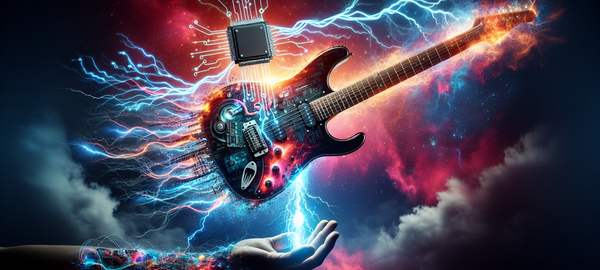
Eddie Van Halen’s iconic riffs might soon be resurrected through artificial intelligence, stirring controversy and excitement.
Hold onto your guitars, folks! The music world is buzzing with a mind-blowing possibility: AI-generated Eddie Van Halen riffs. It’s like stepping into a sci-fi rockumentary where AI and artistry collide in a spectacular showdown. But can algorithms truly capture the soul-stirring magic of Eddie’s fingers dancing across the fretboard?
As a performer who’s shared stages with legends, I can’t help but feel a mix of awe and unease. I remember the first time I heard Eddie’s tapping technique – it was like discovering a new language of music. Now, imagining AI replicating that feels both exciting and slightly sacrilegious. It’s a brave new world, indeed!
AI Shredding: The Virtual Resurrection of Eddie Van Halen
OMG, guys! Alex Van Halen is totally shaking things up! He’s reaching out to OpenAI – you know, the ChatGPT folks – to maybe create new Eddie Van Halen-style riffs and solos. Can you even?! It’s been four years since we lost the guitar god, but the demand for his epic shredding is still sky-high.
Alex spilled the tea to Rolling Stone while promoting his book ‘Brothers’. He’s hoping AI can analyze ‘the patterns of how Edward would have played something’. Like, imagine having a virtual Eddie jamming out fresh licks! But hold up – there’s some serious drama brewing. Wolfgang Van Halen, Eddie’s son, is not feeling it. He’s all, ‘I don’t appreciate families releasing everything after artists pass.’
The fan reaction is totally split. Some are like, ‘This is the future, deal with it!’ while others are screaming, ‘No one wants AI EVH, Alex!’ It’s like, ethical minefield much? But with 12 studio albums and tons of unreleased stuff, who knows what epic guitar goodness might be hiding in the Van Halen vault?
Rocking the Future: Your Voice Matters
As we stand at the crossroads of technology and musical legacy, it’s time to tune up our opinions. Should AI be allowed to channel the spirit of rock legends like Eddie Van Halen? Or should we let sleeping guitars lie? Your thoughts could shape the future of music. Share your take – are you ready to hear AI-generated Van Halen riffs, or do you think some solos should remain in the past? Let’s start a conversation that rocks as hard as Eddie’s most epic shreds!
Eddie Van Halen AI FAQ
Q: Can AI really replicate Eddie Van Halen’s guitar style? A: While AI can analyze patterns and create similar sounds, it’s debated whether it can truly capture the nuance and emotion of Eddie’s playing. The technology is advancing, but replicating human creativity remains challenging.
Q: What’s the controversy around AI-generated Eddie Van Halen music? A: The main concerns are ethical issues surrounding using a deceased artist’s style, potential impact on their legacy, and questions about authenticity. Some fans and family members oppose the idea.
Q: How much unreleased Van Halen material exists? A: According to Alex Van Halen, there are numerous unreleased audio snippets in the band’s archives from their 50-year career, though he notes they’re mostly ‘little pieces’ rather than complete songs.
Attention creators: AI training sparks a revolutionary movement in the music industry!
OMG, guys! The music world is totally buzzing with this wild AI training drama! It’s like, imagine if your songs could suddenly write themselves – crazy, right? But here’s the tea: some big-shot artists are all “Hold up, not so fast!” They’re fighting to keep AI from stealing their vibes. Speaking of vibes, remember when we talked about ethical beat sounds? This is kinda like that, but way more intense!
So, picture this: I’m in the studio, laying down some fresh tracks, when suddenly my AI assistant starts mimicking my voice perfectly. I’m like, “Whoa, dude, that’s both awesome and freaky!” It got me thinking – what if AI could clone my whole style? Would I be out of a job, or would it push me to create even cooler tunes? It’s a total mind-bender, I tell ya!
Artists Rally Against Unauthorized AI Training
Okay, so here’s the scoop: The Human Artistry Campaign is totally freaking out about AI training on artists’ work without permission. They’re like, “No way, José!” to using creative stuff without asking first. It’s a major threat to artists’ livelihoods, y’all!
Get this: over 13,500 people have already signed their statement! That’s, like, a whole stadium of angry artists! They’ve even got this fancy website at aitrainingstatement.org where you can join the rebellion.
And it’s not just small-time artists – we’re talking big guns like RIAA and SAG-AFTRA backing this up. They’re also pushing for this cool-sounding NO FAKES Act to stop those creepy AI deepfakes. It’s like, hands off our voices and faces, robot overlords!
Join the AI-rtistic Revolution
Alright, music fam, it’s time to get loud! This AI training debate is shaking up the industry, and your voice matters. Are you Team Human or Team AI? Maybe you’re somewhere in between? Share your thoughts, fears, and wildest AI music dreams in the comments below. Let’s brainstorm how we can keep the music world rockin’ while embracing the future. Who knows? Your idea might just be the next big thing in music tech. So, spill the tea – what’s your take on this AI-mazing controversy?
Quick FAQ on AI Training in Music
Q: What is the Human Artistry Campaign? A: It’s a coalition of music industry organizations working to protect artists’ rights in the age of AI, with over 13,500 signatures on their AI training statement.
Q: What’s the NO FAKES Act? A: It’s a proposed law to establish federal rights for individuals to own their voices and likenesses, combating unauthorized AI-generated deepfakes and voice clones.
Q: How can I support ethical AI training in music? A: Sign the AI training statement at aitrainingstatement.org, stay informed about AI legislation, and support artists directly through official channels.
Soundraw, Ecrett Music, AI music: Revolutionizing creativity’s essence.
Wake up, music enthusiasts! The AI revolution is here, and it’s transforming the very fabric of music creation. From AI-powered composition tools to automated production techniques, artificial intelligence is reshaping how we conceive, create, and consume music. It’s time to embrace this technological symphony and explore its boundless possibilities.
As a composer, I once spent days tweaking a melody, only to have AI suggest a brilliant variation in seconds. It was humbling, yet exhilarating. This experience opened my eyes to AI’s potential as a collaborative partner, not a replacement, in the creative process.
Understanding AI’s Influence with Soundraw: The Foundation of AI in Music
Artificial Intelligence is revolutionizing music creation, with platforms like Soundraw leading the charge. AI utilizes sophisticated algorithms to analyze patterns in existing music, enabling machines to generate novel compositions. This process involves machine learning, deep learning, and neural networks, which deconstruct music into data sets for processing.
The foundation of AI in music lies in its ability to learn from vast databases of musical pieces. By identifying unique structures, rhythms, and harmonies, AI can suggest and even create compositions that adhere to or innovate on existing musical styles. This technology opens up new creative realms for musicians, allowing them to explore without technical barriers.
Understanding these basic principles provides insight into how AI can transform music production. AI-generated music is composed, produced, or generated with the assistance of artificial intelligence technologies, offering a collaborative approach between human creativity and machine precision. As this technology continues to evolve, it sets the stage for deeper integration of AI in music creation processes.
Exploring Ecrett Music: The Path of Machine Learning in Composition
Ecrett Music exemplifies AI’s sophisticated approach to music composition through machine learning. By learning from vast databases of musical pieces, AI algorithms can identify unique structures, rhythms, and harmonies. This process empowers AI to suggest and even create compositions that adhere to or innovate on existing musical styles.
Machine learning enhances music production workflows by providing compositional suggestions and automating tasks that were traditionally manual. For instance, AI can analyze a musician’s style and offer complementary melodies or chord progressions, streamlining the creative process. This technology is particularly useful for composers seeking inspiration or looking to explore new musical territories.
As AI continues to advance, the integration of such tools becomes increasingly prevalent. This shift symbolizes a more collaborative interaction between humans and technology in music creation. Musicians can now leverage AI to augment their creativity, pushing the boundaries of what’s possible in composition and production.
AI Music: From Inspiration to Creation with Neural Networks
Within the AI music landscape, neural networks are at the forefront of transforming inspiration into creation. These networks mimic human brain operations to recognize and process complex musical patterns autonomously. By feeding vast quantities of music data into neural networks, they learn to compose original music that captures the nuances and styles of different genres.
AI-driven platforms that utilize neural networks offer musicians innovative avenues for generating unique music. Whether supplementing inspiration or creating entirely new compositions, this technology redefines the traditional music creation process. For example, AI in music can analyze a musician’s previous works and generate new pieces in a similar style, or even blend multiple genres to create something entirely novel.
The use of soundraw, ecrett music, and other AI music tools enables new levels of artistic exploration and creativity. Musicians can now experiment with complex harmonies, unusual rhythms, and unique sound combinations that might have been challenging to conceptualize or execute manually. This technology opens up endless possibilities for musical innovation and experimentation.
Key Insight: AI is not replacing human creativity in music; it’s augmenting and expanding it. By embracing AI tools, musicians can explore new creative territories, streamline their workflow, and reach audiences in unprecedented ways.
AI’s Harmony with the Music Industry: Future Prospects
The rise of AI in the music industry presents dynamic prospects for future innovations. As AI tools become more sophisticated, they are poised to revolutionize everything from music production to performance and distribution. The technology supports artists in augmenting their creative process, enhancing live performances with real-time composition, and offering new revenue streams.
AI’s ability to analyze and generate music opens exciting opportunities for personalized listener experiences. Streaming platforms could use AI to create custom playlists that adapt in real-time to a listener’s mood or activity. Additionally, AI could help discover emerging artists by analyzing music trends and predicting potential hits, democratizing the industry.
Furthermore, AI is set to transform music education and accessibility. AI-powered tools could provide personalized music lessons, adapting to each student’s learning pace and style. The harmonious integration of AI paves the way for a future where creativity and technology coalesce seamlessly in the music industry, promising exciting developments for artists and listeners alike.
Innovating the Soundscape: AI-Driven Music Business Models
As AI reshapes the music landscape, innovative business models are emerging. Imagine a subscription service that delivers personalized, AI-generated music tailored to individual moods and activities. This could revolutionize how we consume background music for work, relaxation, or exercise, creating a $1 billion market within five years.
Another exciting prospect is AI-powered virtual bands. Companies could create AI musicians with distinct personalities and styles, capable of producing new music on demand. These virtual artists could collaborate with human musicians, offering unique cross-reality experiences. This concept could potentially generate $500 million in annual revenue through streaming, merchandise, and virtual concerts.
Lastly, AI could transform music licensing. An AI system could instantly generate custom music for commercials, films, or games based on specific emotional cues or brand guidelines. This could streamline the licensing process and open up a $2 billion market for on-demand, rights-cleared music creation.
Embrace the AI Symphony
As we stand on the brink of this AI-driven musical revolution, the possibilities are both exhilarating and boundless. From personalized compositions to AI collaborations, the future of music is being rewritten. Are you ready to join this harmonious blend of human creativity and artificial intelligence? What innovative ways can you envision AI enhancing your musical journey? Let’s start a conversation and explore this new frontier together.
FAQ: AI in Music Essentials
Q: What is AI-generated music? A: AI-generated music is composed or produced using artificial intelligence algorithms. These systems analyze existing music to create new compositions, often mimicking various styles and genres.
Q: How is AI changing the music industry? A: AI is transforming music creation, production, and distribution. It’s enabling faster composition, personalized listening experiences, and new ways for artists to collaborate and reach audiences.
Q: Can AI replace human musicians? A: While AI can create music, it’s seen as a tool to augment human creativity rather than replace it. AI assists in composition and production, but human emotion and interpretation remain crucial in music-making.
Ready to revolutionize your beats? LoopMagic’s AI-powered sounds for beats will blow your mind!
Yo, music producers! Get ready to have your minds blown by the latest innovation in beat-making technology. LoopMagic, a collaboration between Grammy-winning producer !llmind and AI platform Boomy, is about to change the game. This isn’t just another tool; it’s a game-changing VST that’ll take your beats to the next level. Trust me, you’re gonna want to hear this!
As a music tech enthusiast, I’ve seen my fair share of ‘revolutionary’ tools, but LoopMagic actually lives up to the hype. I remember spending hours digging through sample packs, trying to find that perfect sound. Now, with LoopMagic, it’s like having a personal beat-making genie. I just whisper my wildest sound dreams, and poof! It appears, ready to drop into my latest track. It’s like magic, but better – because it’s real!
LoopMagic: The Ethical AI Sound Generator Revolution
OMG, guys! You won’t believe what !llmind and Boomy just dropped. It’s called LoopMagic, and it’s like, the coolest thing ever for making beats! 🎵🔥
So, here’s the tea: LoopMagic is this super smart AI that can create any sound you can imagine. Like, literally anything! Want a firetruck siren underwater at 120 BPM in C minor? Just ask, and boom – it’s yours! And get this: it’s all trained on !llmind’s own music, so you don’t have to worry about copyright stuff. How cool is that?
The best part? It’s not just some boring MIDI thing. It’s using real AI to make brand new sounds from scratch every single time. And everything you make is 100% yours. No one else will have the same beats as you. It’s like having your own personal !llmind in your computer, making sick sounds just for you. I’m seriously freaking out over how awesome this is! 🤯
Ready to Transform Your Beats?
Alright, fellow beat-makers, it’s time to level up your game! LoopMagic isn’t just another tool – it’s your ticket to a whole new world of sound creation. Imagine the endless possibilities waiting at your fingertips. What crazy, unique beats will you create? How will you push the boundaries of music production? Don’t let this opportunity slip away. Dive in, experiment, and let your creativity run wild. Who knows? Your next beat could be the one that changes everything. So, what are you waiting for? Let’s hear what you’ve got!
Quick FAQ on LoopMagic
Q: Is LoopMagic really copyright-free? A: Yes! LoopMagic is ethically trained using only !llmind’s music catalog, ensuring all generated sounds are free to use without clearance issues.
Q: Can LoopMagic create any type of sound? A: Absolutely! From traditional instruments to unique, never-before-heard sounds, LoopMagic can generate it all based on your prompts.
Q: How does LoopMagic compare to other AI music tools? A: Unlike many competitors, LoopMagic creates actual sounds, not just MIDI. It’s trained on a specific, ethically-sourced dataset, offering unique and copyright-free outputs.
Unleash your creativity with AI for music revolution!
Welcome to the cutting-edge world of AI in music! This transformative technology is reshaping how we create, produce, and experience music. From AI-powered composition tools to innovative sound design, the possibilities are endless. Get ready to explore the harmonious fusion of artificial intelligence and musical artistry!
As a composer and music-tech enthusiast, I once spent hours tweaking a melody, only to have an AI suggest the perfect variation in seconds. It was both humbling and exhilarating – like having a tireless musical collaborator with an endless repertoire of ideas!
The Genesis of AI for Music: Early Innovations
The journey of AI in music began with pioneering experiments in algorithmic composition. In the mid-20th century, visionaries like Iván Sutherland and Max Mathews explored computational methods to create music, setting the stage for AI’s integration into the art form. Their groundbreaking work led to the first computer-generated music, a milestone that opened up a world of possibilities.
These early innovations established the foundation for using computational power in music creation. By demonstrating that machines could generate musical patterns, these pioneers sparked interest in more advanced applications of AI. This historical context is crucial for understanding how AI has evolved to become an integral part of modern music production.
The progression from simple algorithms to complex AI systems capable of composing entire pieces showcases the rapid advancement of technology in music. Today, AI for music encompasses a wide range of applications, from assisting in composition to revolutionizing sound design, all built upon the groundwork laid by these early innovators.
Soundraw and the Evolution of Creative Tools
As AI technology advanced, tools like Soundraw emerged, revolutionizing the music creation process. Soundraw harnesses AI to offer customizable soundtracks, making composition accessible to creators of all skill levels. This shift marks a significant departure from traditional music creation methods, democratizing the art form and enhancing efficiency for non-musicians and professionals alike.
By enabling real-time collaboration between humans and AI, Soundraw and similar tools represent a pivotal moment in music technology. They focus on enhancing creativity rather than replacing artists, fostering a symbiotic relationship between technology and human creativity. This evolution underscores the potential of AI to augment rather than supplant human artistry.
The impact of these AI-powered tools extends beyond individual creators to the entire music industry. They’re reshaping workflows, opening up new possibilities for rapid prototyping, and allowing for unprecedented levels of customization in music production. As these tools continue to evolve, they promise to further blur the lines between technology and creativity in exciting ways.
AI-Powered Music: The Rise of Intelligent Production
The integration of AI in music production has given rise to intelligent systems capable of analyzing and generating music with remarkable sophistication. Deep learning and neural networks now enable AI to understand and mimic diverse music styles, even generating compositions that emulate renowned composers. This capability has revolutionized the landscape of AI for music, introducing intelligent production tools that assist with remixing, mastering, and songwriting.
These innovations demonstrate AI’s deepening involvement in the creative process, challenging traditional notions of authorship and originality in music. As AI systems become increasingly adept at generating complex musical pieces, they raise intriguing questions about the nature of creativity and the role of technology in art. The ability of AI to analyze vast datasets of music and distill stylistic elements has opened up new avenues for exploration and experimentation.
However, the rise of AI in music production also brings challenges. Issues of copyright, artistic integrity, and the potential homogenization of music styles are at the forefront of discussions in the industry. As we navigate this new terrain, finding a balance between leveraging AI’s capabilities and preserving the human element in music creation remains a crucial consideration for artists, producers, and listeners alike.
The fusion of AI and music is not just changing how we create and consume music; it’s redefining the very essence of musical creativity and education, promising a future where technology and artistry harmonize in unprecedented ways.
Exploring Music’s Future with AI
Looking ahead, the continuous evolution of AI in music promises to open new horizons in creativity and distribution. AI’s potential for personalization is transforming how audiences consume music, creating data-driven experiences tailored to individual tastes. This shift towards AI-curated playlists and recommendations is reshaping the music discovery process, potentially democratizing exposure for emerging artists while challenging traditional promotion models.
Advancements in AI technology are likely to lead to more immersive and interactive musical experiences. Virtual reality concerts powered by AI, adaptive soundtracks that respond to user emotions or environments, and AI-assisted live performances are just a few possibilities on the horizon. These innovations push the boundaries of traditional music forms, inviting audiences to engage with music in entirely new ways.
As AI’s role in music grows, the industry must grapple with ethical and creative challenges. Balancing technological advancement with artistic integrity, addressing concerns about AI-generated content’s authenticity, and ensuring fair compensation for human artists in an AI-driven landscape are critical issues to resolve. The future of music with AI is both exciting and complex, promising a landscape of endless creative possibilities while necessitating thoughtful navigation of its implications.
Innovating the Soundscape: AI-Driven Music Frontiers
For large corporations and startups alike, the AI music revolution presents unprecedented opportunities for innovation. Imagine a platform that uses AI to create personalized soundtracks for everyday life, adapting to users’ activities, moods, and environments in real-time. This could revolutionize personal audio experiences, from workout playlists to ambient work music, potentially tapping into a multi-billion dollar market.
Another innovative concept could be an AI-powered virtual band creator, allowing users to assemble and customize their own digital music groups. This tool could generate original compositions in various styles, complete with AI-generated vocals and visuals, opening up new avenues for entertainment and content creation. The potential for licensing these AI-generated bands for commercials, games, or movies could create a lucrative new industry segment.
Lastly, consider an AI-driven music education platform that adapts to each student’s learning style and pace. By analyzing a student’s performance and progress, the system could create personalized lesson plans, generate custom exercises, and even compose pieces tailored to challenge and improve specific skills. This could transform music education, making it more accessible and effective for learners of all ages and skill levels.
Embrace the Symphonic Future
As we stand on the brink of this AI-powered musical revolution, the possibilities are as endless as they are exciting. From personalized compositions to immersive experiences, AI is set to transform every aspect of our musical landscape. But this journey isn’t just about technology—it’s about us, the creators, performers, and listeners. How will you contribute to this new era of music? What innovative ideas do you have for blending AI with traditional musicianship? Share your thoughts and let’s compose the future of music together!
FAQ: AI in Music Revolution
Q: How is AI changing music composition? A: AI is revolutionizing music composition by offering tools that can generate melodies, harmonies, and even entire compositions based on input parameters. It’s making music creation more accessible and efficient for both professionals and amateurs.
Q: Can AI-generated music be copyrighted? A: The copyright status of AI-generated music is complex and evolving. Currently, most jurisdictions require human creativity for copyright protection, making AI-generated works a gray area. This is an ongoing legal and ethical debate in the music industry.
Q: Will AI replace human musicians? A: While AI is enhancing music creation, it’s unlikely to replace human musicians entirely. Instead, it’s becoming a powerful tool that augments human creativity, offering new possibilities for collaboration between artists and technology.
New music enthusiasts, prepare for a revolutionary shift in the industry landscape!
Hold onto your headphones, folks! The music industry is evolving faster than a viral TikTok dance. With digital tech shaking things up, we’re not just talking about new releases anymore. It’s a whole new world out there, and if you’re feeling overwhelmed, don’t worry – you’re not alone. Remember when we explored the legal remixing revolution? That was just the beginning!
As a performer who’s graced stages from the Royal Opera House to TEDx, I’ve witnessed firsthand how new music can transform experiences. Once, during a 5G-powered concert, I sang in London while my dad played piano in Berlin. Talk about a mind-blowing duet across countries! It’s moments like these that remind me how technology is reshaping our musical landscape.
Hypebot: Your New Music Industry Compass
OMG, guys! Hypebot is like the coolest BFF for music industry pros. They’re not just spilling tea about who’s in and who’s out. Nope, they’re dishing out the real deal on all things new music and tech. It’s like having a crystal ball for the industry!
Get this: over 30,000 music bigwigs read Hypebot daily. We’re talking execs, tech gurus, label hotshots, and even the indie crowd. It’s like the ultimate music industry group chat, but way more informative.
But here’s the kicker – Hypebot isn’t just about the gossip. They’re all about helping you navigate the crazy world of new music trends and tech. It’s like having a roadmap for the future of tunes. How cool is that?
Join the Music Tech Revolution
Ready to ride the wave of new music innovation? It’s time to tune in to the future! Whether you’re a budding artist, a tech whiz, or just a music lover, there’s never been a more exciting time to dive into the industry. Why not start by exploring some cutting-edge music tech? Or better yet, share your own innovative ideas! What new music trends are you most excited about? Let’s get this conversation rolling and create some noise in the comments!
New Music Tech FAQ
Q: How is technology changing the music industry?
A: Technology is revolutionizing music creation, distribution, and consumption. From AI-assisted composition to blockchain for royalties, and streaming platforms reshaping how we listen, tech is driving rapid changes across the entire industry.
Q: What are some emerging trends in new music?
A: Key trends include AI-generated music, immersive audio experiences (like spatial audio), blockchain for music rights, and the rise of social media platforms as music discovery tools.
Q: How can I stay updated on new music industry developments?
A: Follow industry news sources like Hypebot, attend music tech conferences, join online music communities, and experiment with new music creation tools and platforms to stay ahead of the curve.
AI music revolution: Soundraw, Ecrett Music redefine creativity.
Welcome to the cutting-edge world of AI-powered music creation! As a musician and tech enthusiast, I’m thrilled to explore how artificial intelligence is reshaping the landscape of sound. From AI-generated compositions to intuitive production tools, we’re witnessing a paradigm shift in how music is conceived, crafted, and shared. Join me on this exciting journey into the future of melody and rhythm!
As a composer, I once spent weeks perfecting a film score. Now, with AI tools like Soundraw, I can generate multiple variations in minutes. It’s both exhilarating and humbling – like having a tireless musical collaborator who never sleeps and never runs out of ideas!
The Digital Symphony: Understanding AI Music
AI music is revolutionizing sound creation by analyzing vast music databases. These sophisticated algorithms craft melodies, rhythms, and harmonies that rival human creativity. Platforms like Soundraw employ AI to generate unique compositions, offering a new world of music-making possibilities.
The process begins with machine learning models trained on extensive musical datasets. These models learn to recognize patterns in harmony, rhythm, and structure. They then apply this knowledge to generate original pieces or assist in composition. This technology isn’t just mimicking existing music; it’s creating new sounds and styles.
AI’s impact on music creation is profound. It’s democratizing the composition process, allowing those without formal musical training to create professional-sounding tracks. For established musicians, it’s a powerful tool for inspiration and experimentation. As AI continues to evolve, we can expect even more innovative applications in the music industry.
Composing the Future: AI Music Innovations with Soundraw
Soundraw exemplifies AI’s prowess in music creation, offering tools that enable users to compose music swiftly and intuitively. This innovative platform blends AI technology with user-driven dynamics, creating a unique interface between technology and human creativity. Users can generate high-quality compositions with minimal effort, revolutionizing the music production process.
The platform’s AI algorithms analyze user preferences and musical styles to generate custom tracks. It offers a range of genres and moods, allowing users to fine-tune their creations. This level of customization ensures that each piece is unique and tailored to the user’s vision, while maintaining professional quality.
Soundraw’s impact extends beyond individual creators. It’s becoming a valuable resource for content creators, advertisers, and filmmakers who need quick, high-quality music. As AI music tools like Soundraw continue to evolve, they’re reshaping the landscape of music creation and distribution, opening new possibilities for creative expression.
Creative Catalysts: Bridging Human and AI Through Ecrett Music
Ecrett Music stands at the forefront of AI-assisted music creation, bridging the gap between human creativity and AI capabilities. This innovative platform offers intuitive interfaces that assist both amateurs and professionals in generating compositions that reflect their personal artistic visions. By leveraging AI, Ecrett Music empowers users to explore new creative horizons.
The platform’s AI algorithms analyze musical patterns and user preferences to suggest complementary elements, harmonies, and structures. This collaboration between human intuition and AI analysis often results in unique and unexpected musical outcomes. It’s not about replacing human creativity, but enhancing and expanding it.
Ecrett Music’s approach highlights the potential for AI to serve as a creative catalyst rather than a replacement for human artists. As AI-generated music continues to evolve, we can anticipate a rich landscape of shared musical exploration, where the boundaries between human and machine creativity become increasingly blurred and exciting.
Key Insight: AI in music is not replacing human creativity, but rather augmenting and expanding it, opening new horizons for artistic expression and industry innovation.
Harmonious Horizons: The Expanding Realm of AI Music
As AI music capabilities expand, they continue to redefine how we interact with sound and each other. Current innovations include AI-powered composition assistants, automated mixing and mastering tools, and even AI-generated virtual artists. These advancements are not only changing how music is created but also how it’s consumed and marketed.
Looking to the future, we can expect AI to play an even more significant role in music production and distribution. Personalized AI DJs might curate playlists tailored to individual listeners’ moods and activities. Virtual reality concerts could feature AI-generated performers adapting in real-time to audience reactions. The possibilities are as exciting as they are boundless.
However, this evolution also raises important ethical questions. How do we attribute authorship and royalties for AI-generated music? What impact will this have on human musicians and the music industry as a whole? As AI in music progresses, it promises not only an evolution in consumption but also a profound shift in global musical culture and its boundaries.
Revolutionizing the Music Industry: AI-Powered Innovations
Imagine a startup that creates personalized music therapy sessions using AI. By analyzing a patient’s biometrics and emotional state, the AI could compose real-time, therapeutic music tailored to individual needs. This could revolutionize mental health treatment and stress management.
Another innovative idea is an AI-powered ‘Music Time Machine.’ This service could take any song and recreate it in the style of different eras or genres. Users could hear their favorite modern pop song as a 1920s jazz piece or a futuristic electronic track, opening up new revenue streams for artists and labels.
For large corporations, an AI-driven music licensing platform could streamline the process of finding and securing rights to music for commercials, films, and other media. By understanding the emotional impact and brand alignment of different musical elements, the AI could suggest perfect matches, saving time and improving creative outcomes.
Embrace the AI-Powered Musical Future
As we stand on the brink of this AI-driven musical revolution, the possibilities are both exciting and limitless. From personalized compositions to groundbreaking production techniques, AI is reshaping the very fabric of music creation and consumption. But remember, at its core, music remains a deeply human experience. How do you see AI influencing your musical journey? Are you ready to embrace these new tools and explore uncharted sonic territories?
FAQ: AI in Music
Q: How accurate is AI in replicating human-like music?
A: AI can create highly convincing music, with some studies showing listeners unable to distinguish between AI and human compositions 50% of the time.
Q: Can AI-generated music be copyrighted?
A: Copyright laws vary, but generally, AI-generated music can be copyrighted if there’s significant human input in the creative process.
Q: Will AI replace human musicians?
A: While AI is a powerful tool, it’s unlikely to replace human musicians entirely. Instead, it’s expected to augment human creativity and open new possibilities in music creation.
Avenged Sevenfold fans, prepare for a spine-tingling journey through 25 years of metal mayhem!
OMG, guys! Avenged Sevenfold just dropped the coolest surprise ever for their 25th anniversary! 🎉 They’ve created this mind-blowing virtual museum inside Fortnite, and it’s not just any museum – it’s a spooky escape room too! 👻 It’s like they’ve taken their epic music and turned it into a whole new interactive experience, letting us dive deep into their history in the most badass way possible!
This totally reminds me of the time I performed at the Royal Opera House as a kid. Talk about a virtual escape room – try finding your way backstage in that maze-like building! 😅 I once got lost and ended up in Madonna’s dressing room by mistake. Imagine my shock when I realized it wasn’t just another costume closet!
Avenged Sevenfold’s Virtual Rockstar Playground
OMG, you guys! 😍 Avenged Sevenfold just launched this insanely cool virtual museum in Fortnite for their 25th anniversary! It’s like, part gallery, part escape room, and 100% epic. The band was all like, ‘We wanted to do something special, not just looking back but forward too.’ How cool is that?
So, get this – you don’t even need to be a gamer to enjoy it! 🎮 You just use your problem-solving skills to navigate through this awesome experience. And the best part? There are hidden meanings, secret recordings, and Easter eggs everywhere! It’s like a treasure hunt for A7X superfans.
The whole thing was created with their buddy Ryan McKinnon, who’s this amazing artist working with Unreal Engine. You can check it out by downloading Fortnite and entering the island code 5592-6865-3961. Trust me, it’s a total Avenged Sevenfold fan’s dream come true! 🤘
Rock On in the Virtual Realm
Ready to dive into Avenged Sevenfold’s virtual world? This museum is just the beginning of how bands are connecting with fans in mind-blowing new ways. Imagine moshing in a digital concert or finding secret tracks in a virtual scavenger hunt! The possibilities are endless, and A7X is leading the charge. So, what’s your dream virtual band experience? Would you rock out in a VR concert or solve puzzles for exclusive merch? Let’s hear your wildest ideas!
Avenged Sevenfold Virtual Museum FAQ
Q: How do I access Avenged Sevenfold’s virtual museum? A: Download Fortnite on any device, enter the island code 5592-6865-3961 in the search bar when prompted.
Q: Do I need to be a gamer to enjoy the virtual museum? A: No, you don’t need gaming skills. The experience is designed for fans to use problem-solving skills to navigate and explore.
Q: What can fans expect to find in the virtual museum? A: The museum features art from different eras of the band, hidden meanings, secret recordings, and Easter eggs for fans to discover.
Music producers, rejoice! A treasure trove of free VST plugins awaits exploration.
In the ever-evolving world of music production, free VST plugins are the secret weapons of savvy producers. These digital gems can transform your tracks from amateur to pro-level without breaking the bank. Speaking of transformation, have you checked out our guide on unleashing your sound with epic free plugins? It’s a game-changer for budget-conscious creators looking to elevate their productions.
As a composer and performer, I’ve experienced the thrill of discovering a game-changing free VST. I once stumbled upon a lush reverb plugin that transformed my home-recorded vocals into professional-sounding tracks. It was like having a high-end studio at my fingertips – all for the grand price of zero dollars!
The Free VST Revolution: Empowering Producers
OMG, guys! The world of free VST plugins is exploding with creativity. From Baby Audio’s Transit 2 to LANDR Composer, producers are spoiled for choice. These freebies aren’t just bargain-bin leftovers – they’re seriously powerful tools. For instance, LANDR Composer uses AI to generate chord progressions and melodies, helping you blast through writer’s block.
But wait, there’s more! Ujam’s Subcraft is giving producers the keys to earth-shaking bass sounds. And for those craving vintage vibes, EastWest’s ICONIC brings classic synth sounds into the modern era. These free VST plugins aren’t just toys – they’re professional-grade instruments that can seriously level up your productions.
The best part? You don’t need to break the bank to access this sonic goldmine. Whether you’re crafting beats in your bedroom or producing in a pro studio, these free VST plugins are your ticket to sonic excellence. So why wait? Start downloading and let your creativity soar!
Remix Your Production Game
Ready to revolutionize your music production? The world of free VST plugins is your oyster. From AI-powered composition tools to vintage synth emulations, the possibilities are endless. Don’t let a tight budget hold you back – these powerful freebies are waiting to transform your tracks. So, what’s your go-to free VST plugin? Share your favorites and let’s start a sonic revolution together!
Your Free VST FAQ
Q: Are free VST plugins really as good as paid ones? A: Many free VSTs rival paid plugins in quality. For example, LANDR Composer offers AI-generated music ideas, competing with expensive alternatives.
Q: How do I install free VST plugins? A: Most free VSTs come with installers. For .zip files, extract and place the .VST file in your DAW’s plugin folder, then rescan.
Q: Can free VST plugins harm my computer? A: Reputable free VSTs are safe. Always download from trusted sources like official developer websites or well-known music tech platforms.
Discover the enchanting world of piano chords and revolutionize your musical journey today.
Piano chords are the backbone of musical harmony, unlocking a universe of melodic possibilities. As a musician, mastering these harmonic building blocks can transform your compositions and performances. Speaking of transformations, have you heard about the new app that lets you legally remix songs? It’s just one example of how technology is reshaping our musical landscape.
As a performer, I’ve always been fascinated by the power of piano chords. I remember my first time at the Royal Opera House, nervously plinking out chords backstage before my debut. Little did I know, those simple harmonies would become the foundation of my musical journey, from opera stages to recording with Madonna!
AI-Powered Chord Magic: LANDR Composer Unveiled
OMG, guys! LANDR just dropped a bomb in the music world with their new LANDR Composer plugin. It’s like having a personal chord genius in your laptop! This AI-powered tool is all about helping you create killer chord progressions, basslines, and melodies. It’s basically the love child of Orb’s Producer Pro plugin and LANDR’s tech wizardry.
So, what’s the deal with LANDR Composer? It’s got some seriously cool features. You can auto-generate complex piano chords and tweak them to your heart’s content. Plus, it’ll spit out unique MIDI patterns for chords, bass, and melodies. And get this – there’s even a ‘Song Mode’ to help you arrange your ideas into a full track. It’s like having a mini-producer in your DAW!
The best part? It’s super user-friendly. You can drag and drop MIDI patterns straight into your DAW, and there’s a built-in synth for instant sound creation. LANDR’s CEO, Pascal Pilon, says it’s all about making music creation accessible to everyone. You can snag LANDR Composer as part of some LANDR Studio subscriptions, or grab it solo for $149. Check out all the deets on the LANDR website. Time to level up those piano chords, peeps!
Harmonize Your Musical Journey
Ready to take your music to the next level with AI-powered chord creation? LANDR Composer is just the beginning of a new era in music technology. Whether you’re a seasoned pro or just starting out, tools like this can inspire and elevate your creative process. So, what chord progression will you create first? Share your experiences and let’s start a conversation about the future of music creation!
FAQ: Piano Chords and AI Composition
Q: What are the basic piano chords for beginners? A: The most basic piano chords for beginners are C, F, and G major. These three chords form the foundation of many songs and are essential for understanding chord progressions.
Q: Can AI really compose music like humans? A: AI can generate musical elements like chord progressions and melodies, but it lacks human emotion and creativity. It’s a powerful tool to assist and inspire human composers, not replace them.
Q: How does LANDR Composer differ from traditional chord generators? A: LANDR Composer uses AI to create more complex and musically coherent chord progressions. It also integrates melody and bassline generation, offering a more comprehensive composition tool than traditional chord generators.