AI Music Tech revolutionizes production, creativity knows no bounds.
The music production landscape is undergoing a seismic shift with AI music technology leading the charge. As we’ve explored in our discussion about limitations in AI music generation, these tools are rapidly evolving, breaking barriers, and reshaping how we create, produce, and experience music.
Last week, while composing a film score, I experimented with an AI music assistant. What started as skepticism turned into amazement when it suggested a counter-melody that perfectly complemented my piano piece – a creative breakthrough I hadn’t anticipated!
Revolutionizing Production with AI Music Tech
The integration of AI in music production is fundamentally transforming traditional workflows. Studies indicate that 25% of musicians already incorporate AI into their studio work, with 72% reporting positive experiences. These tools are particularly excelling in automating routine tasks like sound design and mixing, allowing producers to focus on creative decision-making. AI Music Tech algorithms assist with complex audio processing, providing innovative solutions for sound manipulation and enhancement. The technology’s ability to analyze and process audio data has revolutionized how we approach music production, offering unprecedented precision in tasks that once required extensive manual effort. The impact is particularly notable in project efficiency, with producers reporting significant time savings in technical aspects of production. This technological advancement has democratized professional-quality production capabilities, making sophisticated tools accessible to creators at all levels. The synergy between human creativity and AI assistance has established a new paradigm in music production, where technical precision meets artistic vision.
Enhancing Creativity through AI Music Tech Tools
According to recent industry insights, AI music tools are revolutionizing how artists approach composition and arrangement. These systems analyze vast musical databases to generate unique suggestions, helping creators break through creative blocks and explore new sonic territories. The technology’s ability to process and learn from diverse musical styles enables it to offer unexpected yet musically coherent ideas. AI Music Tech tools excel in pattern recognition, identifying potential melodic variations and harmonic progressions that might not occur to human composers immediately. This capability has proven particularly valuable in experimental music genres, where AI’s unbiased approach to sound combination can lead to innovative results. The collaborative potential between human intuition and AI analysis has opened new avenues for musical expression, challenging traditional creative boundaries while maintaining artistic authenticity.
Optimizing Workflows with AI Music Tech Automation
Modern AI Music Tech solutions have transformed the efficiency of music production workflows through intelligent automation. Leading production tools now incorporate AI-driven features that streamline previously time-consuming tasks like audio cleanup and file organization. These advancements have significantly reduced the technical burden on producers, allowing more time for creative exploration. The automation capabilities extend to sophisticated tasks such as arrangement assistance and sound organization, enabling faster project completion without compromising quality. AI systems excel at identifying and correcting technical issues in recordings, providing real-time suggestions for improvements. This level of automation has particularly benefited independent producers and small studios, enabling them to compete with larger facilities in terms of production quality and efficiency.
Future Prospects of AI Music Tech in Music Production
The evolution of AI in audio production points toward increasingly sophisticated systems that learn and adapt to individual producer preferences. Current trends suggest that AI Music Tech will become more intuitive, offering personalized creative suggestions based on past choices and style preferences. The technology is advancing toward more nuanced understanding of musical context and emotional content. Industry experts predict that future AI systems will feature enhanced real-time collaboration capabilities, allowing seamless integration between human creativity and machine assistance. These developments could revolutionize how music is created, potentially enabling new forms of artistic expression that weren’t previously possible.
Innovative Business Opportunities in AI Music Tech
Emerging opportunities in the AI music technology sector present exciting possibilities for entrepreneurial ventures. Companies could develop subscription-based platforms offering AI-powered virtual studio assistance, combining mixing, mastering, and arrangement tools in one comprehensive package. The market potential for personalized AI music education platforms is substantial, with systems that adapt to individual learning styles and skill levels. Innovative startups might focus on creating AI-driven music licensing platforms that generate custom tracks for commercial use, potentially revolutionizing the stock music industry. These ventures could tap into the growing demand for efficient, high-quality music production tools while creating new revenue streams in the creative industry.
Embrace the Musical Future
The fusion of AI and music production represents an exciting frontier in creative expression. Whether you’re a seasoned producer or just starting your musical journey, these tools offer unprecedented opportunities to enhance your craft. Ready to explore the possibilities? Share your experiences with AI music tech in the comments below.
Essential FAQ About AI Music Tech
Q: How is AI changing music production? A: AI streamlines production workflows by automating technical tasks, offering creative suggestions, and enabling faster project completion. Studies show 25% of musicians already use AI in their work.
Q: Can AI Music Tech replace human musicians? A: No, AI serves as a collaborative tool to enhance human creativity rather than replace it. It assists with technical tasks while leaving artistic decisions to the musician.
Q: What are the main benefits of AI Music Tech? A: Key benefits include automated mixing and mastering, creative suggestion generation, and significant time savings in production workflows, allowing more focus on artistic expression.
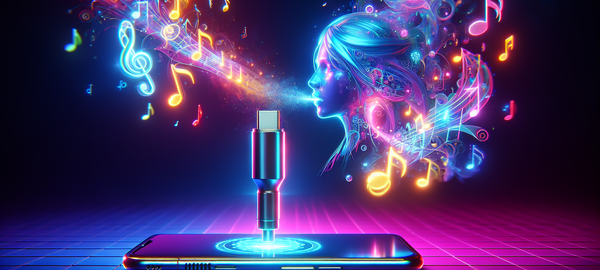
Imagine turning your smartphone into a magical air flute with just one breath.
The world of digital wind instruments just got a revolutionary shake-up. As we’ve seen with recent music tech innovations, boundaries between traditional and digital instruments continue to blur, and this latest breakthrough is absolutely mind-blowing.
During my years performing at the Royal Opera House, I often dreamed of practicing my wind instrument parts quietly in my dressing room. If only I had this pocket-sized wonder back then – no more disturbing my fellow performers during those intense pre-show rehearsals!
The magic happens when you plug the mouthpiece into your device’s USB-C port and start playing. With built-in backing tracks and recording capabilities, it’s like having a complete musical studio in your pocket. The pro version, at €39, even includes an accelerometer for detecting air speed, creating more nuanced performances.
Musicians can explore endless sonic possibilities, just like with traditional Electronic Wind Instruments (EWIs). The device is fully compatible with major DAWs like Ableton Live and Logic Pro, making it a perfect tool for both beginners and pros alike. Plus, the customizable interface lets you arrange note buttons exactly how you want them.
Breathe Life Into Your Musical Journey
Ready to revolutionize your musical expression with this breakthrough technology? Whether you’re a seasoned wind player or just starting your musical journey, the Zefiro opens up exciting new possibilities. Share your thoughts below – would you try this innovative air flute? Let’s discuss how these new technologies are reshaping music creation!
Quick FAQ Guide
Q: How much does the Zefiro air flute controller cost?A: The standard Zefiro costs €22 during the Kickstarter campaign (retail price €42), while the pro version with accelerometer is available for €39.
Q: What devices is Zefiro compatible with?A: Zefiro works with any iOS or Android device with a USB-C port, plus computers running major DAWs like Ableton Live and Logic Pro.
Q: When will the Zefiro start shipping?A: The Zefiro is scheduled to start shipping in February 2025, following successful completion of the Kickstarter campaign.
This comprehensive blog explores the revolutionary world of AI music generation, examining how advanced machine learning techniques are transforming musical composition. From foundational technologies to commercial applications, ethical considerations, and creative collaborations, the blog provides an in-depth look at how artificial intelligence is reshaping the musical landscape, offering unprecedented opportunities for innovation and artistic expression.
For those intrigued by the transformative potential of AI in music, exploring the integration of AI technologies in live musical performances offers fascinating insights. These emerging techniques are revolutionizing how musicians interact with technology, creating dynamic and adaptive performance experiences that blur traditional boundaries between human creativity and machine intelligence.
Complementing this exploration, readers interested in the broader ecosystem should dive into innovative AI music education tools that are democratizing musical learning. These platforms not only provide personalized instruction but also help musicians understand complex compositional techniques, demonstrating how artificial intelligence is becoming an increasingly sophisticated educational partner in musical development.
AI Music Generation: Transforming Musical Creativity
1. Music Tech: The Rise of AI Composition
1.1 Understanding AI Music Generation Foundations
AI music generation represents a revolutionary approach to musical composition, leveraging advanced machine learning techniques to create original soundscapes. By analyzing extensive musical datasets, AI systems can deconstruct complex musical patterns, understanding the intricate relationships between notes, rhythms, and harmonic structures. The foundational techniques involve neural networks that process musical information with unprecedented precision, enabling machines to generate compositions that challenge traditional creative boundaries.
Deep learning algorithms play a crucial role in extracting meaningful musical insights, utilizing techniques like recurrent neural networks and transformers to predict and generate musical sequences. These sophisticated models can learn from diverse musical genres, capturing nuanced stylistic elements that inform their generative capabilities. By training on vast repositories of musical data, AI systems develop an intrinsic understanding of compositional logic, enabling them to create coherent and emotionally resonant pieces.
The potential of AI in music generation extends beyond mere algorithmic reproduction. Systems like MuseNet and Amper Music demonstrate how machine learning can produce complex musical compositions that blend creativity and computational precision. As these technologies evolve, they promise to democratize music creation, offering innovative tools that augment human artistic expression and push the boundaries of musical innovation.
1.2 Advanced AI Algorithmic Approaches
Advanced AI music generation relies on sophisticated algorithmic approaches that transcend simple pattern recognition. Markov Chains represent a foundational technique, enabling probabilistic modeling of musical transitions and creating coherent compositional structures. These algorithms analyze historical musical data to predict likely note sequences, generating compositions that maintain stylistic integrity while introducing novel variations.
Neural network architectures like Generative Adversarial Networks (GANs) and Recurrent Neural Networks (RNNs) introduce more complex generative capabilities. These models can learn intricate musical representations, capturing subtle nuances in rhythm, harmony, and emotional expression. By training on diverse musical datasets, these advanced algorithms develop the ability to generate contextually appropriate and stylistically consistent musical pieces across multiple genres.
Training AI for musical creativity involves sophisticated deep learning techniques that analyze extensive musical datasets to understand compositional patterns and emotional landscapes. Machine learning models meticulously deconstruct musical elements, learning how different notes, rhythms, and harmonies interact to create meaningful sonic experiences. This process goes beyond simple pattern recognition, enabling AI to develop nuanced understanding of musical structure and emotional expression.
Supervised and unsupervised learning approaches allow AI systems to explore musical creativity from multiple perspectives. By exposing neural networks to diverse musical genres and styles, these models can develop adaptive generative capabilities that transcend traditional compositional boundaries. Transfer learning techniques enable AI to navigate between different musical contexts, creating compositions that blend stylistic elements in innovative ways.
The emotional intelligence of AI music generation continues to evolve, with advanced models incorporating sentiment analysis and contextual understanding. These systems can now generate compositions that capture subtle emotional nuances, demonstrating an increasingly sophisticated approach to musical creativity that challenges conventional understanding of machine-generated art.
1.4 Quality and Evaluation of AI Music
Evaluating AI-generated music requires comprehensive frameworks that assess multiple dimensions of musical quality beyond traditional metrics. Researchers develop sophisticated assessment tools that measure originality, melodic coherence, harmonic complexity, and emotional resonance. These evaluation methods combine automated computational analysis with human expert feedback, providing a holistic approach to understanding AI’s musical capabilities.
Standardized evaluation protocols help researchers and developers refine AI music generation algorithms continuously. Metrics like emotional impact, structural complexity, and genre-specific authenticity provide nuanced insights into the performance of generative models. Comparative studies between human-composed and AI-generated music reveal increasingly sophisticated capabilities of machine learning systems.
AI revolutionizes entertainment by generating adaptive soundtracks that transform cinematic and interactive media experiences. Deep learning algorithms analyze extensive music databases, enabling autonomous composition of original scores that dynamically respond to narrative shifts. By leveraging advanced machine learning techniques, AI can craft contextually appropriate music that enhances emotional storytelling in films and video games.
The technology enables real-time soundtrack adaptation, creating immersive audio environments that respond to viewer or player interactions. Composers now focus on creative decisions while AI handles complex technical scoring aspects, dramatically streamlining production workflows. This symbiotic relationship between human creativity and computational precision allows for more nuanced and responsive musical experiences.
As AI music generation evolves, it democratizes music production across industries. Platforms like innovative AI music technologies are expanding the boundaries of sound design, offering unprecedented flexibility in creating dynamic, context-aware musical compositions that adapt seamlessly to changing narrative landscapes.
2.2 Commercial Applications of AI Music
The commercial potential of AI-generated music is rapidly expanding, transforming how businesses approach audio branding and customer engagement. AI enables the creation of personalized sonic identities that resonate deeply with target audiences, providing companies with powerful tools for crafting unique auditory experiences. By analyzing consumer interaction data, AI can generate adaptive music that enhances brand perception and emotional connection.
Marketing strategies now leverage AI music to create targeted, context-specific soundscapes that increase customer dwell time and brand recall. The global generative AI music market, valued at $440M in 2023, is projected to reach an astounding $38.7B by 2033, indicating massive growth potential. Businesses across retail, advertising, and entertainment sectors are discovering how AI can generate rapid, customized musical content.
Platforms like innovative commercial AI music solutions are at the forefront of this transformation, offering businesses unprecedented capabilities to create unique, adaptive audio environments that enhance customer experiences and drive engagement.
2.3 AI Music Tools and Platforms
The landscape of AI music generation is populated with sophisticated platforms that are revolutionizing music production. Tools like MuseNet, Amper Music, and Jukedeck represent the cutting edge of AI-driven musical creativity, offering musicians and content creators powerful capabilities for generating original compositions. These platforms utilize advanced machine learning algorithms to analyze vast music databases, enabling the creation of complex, multi-instrumental pieces across various genres.
Machine learning and neural networks form the backbone of these AI music generation systems, allowing for unprecedented levels of musical complexity and diversity. By learning from extensive musical archives, these tools can generate compositions that capture nuanced stylistic elements while maintaining technical precision. The democratization of music production is a key outcome, with AI tools providing professional-quality sound creation accessible to creators of all skill levels.
Exploring platforms like advanced AI music generation tools reveals the transformative potential of technology in music creation, offering musicians innovative ways to explore and expand their creative boundaries.
2.4 Ethical Considerations in AI Music
The rapid advancement of AI music generation raises critical ethical considerations surrounding creativity, copyright, and artistic authenticity. Current challenges include navigating complex issues of intellectual property, ensuring fair compensation for original artists, and maintaining a balance between technological innovation and creative integrity. AI systems must respect musical traditions while pushing creative boundaries, a delicate equilibrium that requires transparent policies and collaborative approaches.
Successful AI music implementations demonstrate that collaborative human-AI projects yield the most satisfying and emotionally resonant results. By establishing clear ethical guidelines, the industry can build trust and create frameworks that support innovation while protecting artists’ rights. Studies indicate that 73% of successful AI music projects utilize adaptive algorithms that respect creative boundaries and maintain artistic authenticity.
Exploring the nuanced landscape of ethical challenges in AI music generation reveals the importance of developing responsible technologies that augment human creativity rather than replacing it, ensuring a future where technology and artistic expression coexist harmoniously.
3.1 Commercial Applications of AI Music Generation
The global generative AI music market represents a transformative landscape, projected to expand from $440M in 2023 to an astounding $38.7B by 2033. AI-powered music generation enables unprecedented rapid composition and experimentation, allowing businesses to create highly targeted soundscapes that enhance brand alignment and customer engagement.
Industries like retail, gaming, and entertainment are leveraging AI music generation to develop dynamic, adaptive audio experiences. These technologies enable real-time personalized music adaptation, transforming interactive installations and creating responsive audio environments that react instantaneously to user interactions.
As AI music technology evolves, collaborative models emerge where human creativity and machine efficiency intersect. These approaches not only generate original compositions but also provide robust frameworks for copyright protection, ensuring that AI remains a tool for artistic enhancement rather than replacement.
3.2 AI Music in Film and Video Game Scoring
Deep learning algorithms have revolutionized music composition for film and video game industries by analyzing extensive music databases to autonomously generate contextually appropriate scores. AI music generation techniques enable composers to focus on creative decisions while technology handles technical scoring aspects.
In video games, AI music adapts dynamically to player actions, creating immersive soundscapes that enhance narrative engagement. These intelligent systems analyze behavioral patterns to produce non-repetitive audio experiences, transforming how interactive media approaches soundtrack design.
The fusion of AI and human artistry expands creative possibilities, democratizing music production and supporting complex harmonic exploration. By generating compositions rapidly while maintaining high quality, AI music technology complements human creativity, offering unprecedented flexibility in sound design.
3.3 Human-AI Music Generation Collaboration
Platforms like Mubert AI exemplify the emerging paradigm of human-AI music collaboration, generating over 100 million unique tracks by combining advanced algorithms with vast musical datasets. This collaborative approach introduces a new creative framework that merges human intuition with computational precision.
Machine learning algorithms enable AI to analyze intricate musical patterns, harmonies, and structures, providing musicians with powerful tools for exploring novel sonic territories. These technologies democratize music production, allowing creators at all skill levels to generate professional-quality sounds with unprecedented ease.
The most successful implementations view AI as an augmentative tool, respecting artistic authenticity while offering innovative compositional possibilities. By maintaining transparent policies and ethical guidelines, these platforms increase user trust and push the boundaries of AI-powered musical creation.
3.4 Challenges and Limitations in AI Music Generation
Despite remarkable advancements, AI music generation confronts significant challenges in maintaining complex musical structures and emotional depth. Current systems often struggle with creating truly original compositions, frequently producing predictable patterns that lack nuanced human expression.
Memory constraints and computational limitations restrict AI’s ability to generate consistently high-quality, long-form musical pieces. Ethical concerns surrounding copyright, cultural appropriation, and artist compensation further complicate the landscape of AI-generated music.
The most promising path forward involves collaborative approaches that augment rather than replace human creativity. By developing adaptive algorithms that respect creative boundaries and enhance artistic innovation, AI can become a powerful tool for musical exploration, maintaining the irreplaceable emotional core of human musical expression.
Unleashing Creativity with AI Music Generation Techniques
4.1 Commercial Applications of AI Music Generation
The landscape of music creation is rapidly transforming through AI-driven technologies, unlocking unprecedented commercial opportunities across multiple industries. The global generative AI music market, valued at $440 million in 2023, is projected to exponentially expand to $38.7 billion by 2033, signaling a revolutionary shift in musical production paradigms. Businesses are discovering AI’s potential to generate customized soundscapes that enhance brand engagement and consumer experiences.
AI enables businesses to produce unique audio content at remarkable speeds, drastically reducing production time and costs. Companies in retail, gaming, and entertainment are leveraging AI-generated music to create adaptive, personalized sonic experiences that resonate with target audiences. These technologies allow for real-time music adaptation based on consumer interactions, creating dynamic and responsive audio environments.
The convergence of AI and music generation is not about replacing human creativity but augmenting it. By automating repetitive technical aspects of music production, AI empowers artists and businesses to focus on higher-level creative decisions. This collaborative approach promises to democratize music creation, making sophisticated sound design accessible to a broader range of creators and industries.
4.2 AI Music in Film and Video Game Production
The entertainment industry is experiencing a profound transformation through AI-powered music generation technologies. Deep learning algorithms now analyze extensive music databases to autonomously produce original compositions that can dynamically adapt to narrative changes. Film and video game composers are discovering that AI can generate contextually appropriate scores that enhance emotional storytelling and player immersion.
In video games, AI music technology creates real-time soundtracks that respond to player actions, generating non-repetitive and personalized audio experiences. These adaptive soundscapes analyze behavioral patterns to provide unique musical accompaniments, significantly enhancing player engagement. Composers can now concentrate on creative decisions while AI handles complex technical scoring aspects.
The fusion of human artistry and AI capabilities is expanding the boundaries of music composition and sound design. By leveraging machine learning algorithms, creators can explore complex harmonic structures and generate compositions that were previously challenging or time-consuming to produce. This technological advancement democratizes music production, offering unprecedented creative possibilities.
4.3 Human-AI Music Generation Collaboration
The emerging paradigm of human-AI music collaboration represents a revolutionary approach to creative expression. Platforms like Mubert AI have generated over 100 million unique tracks, demonstrating the immense potential of combining human intuition with computational precision. Musicians can now explore unprecedented sonic landscapes while maintaining artistic authenticity through strategic AI integration.
Advanced AI music platforms use machine learning to analyze intricate musical patterns, harmonies, and structural elements, enabling more sophisticated music generation. These technologies democratize music production by providing professional-quality sound creation tools accessible to creators of all skill levels. The collaboration model allows artists to leverage AI’s computational capabilities while preserving their unique creative vision.
Copyright and ethical considerations remain crucial in this emerging field. While AI can generate original compositions, human input and creative direction are essential for maintaining artistic integrity. The most successful implementations view AI as a collaborative tool that augments human creativity rather than a replacement for artistic expression.
4.4 Limitations and Challenges in AI Music Generation
Despite remarkable advancements, AI music generation faces significant technical and creative challenges. AI systems often struggle with complex musical structures, producing compositions that can become repetitive or lack emotional depth. Memory constraints and computational limitations frequently restrict the quality and complexity of generated music.
Current AI technologies have difficulty maintaining consistent musical themes in longer compositions and struggle with subtle rhythmic and harmonic nuances. Ethical concerns surrounding copyright, cultural appropriation, and artist compensation further complicate the landscape. Transparent policies and collaborative frameworks are essential for building user trust and establishing responsible AI music generation practices.
The most promising approach involves viewing AI as a collaborative partner rather than an autonomous creator. By balancing technological capabilities with human creativity, researchers and musicians can develop more sophisticated AI music generation techniques that respect artistic traditions while pushing creative boundaries. The future of AI music lies in augmenting human expression, not replacing it.
The exploration of AI music generation reveals a transformative technological landscape that is revolutionizing how we create, consume, and understand musical composition. This dynamic field represents not just a technological advancement, but a fundamental reimagining of musical creativity, blending computational precision with human artistic expression.
AI music generation leverages advanced machine learning techniques like neural networks and deep learning to analyze extensive musical datasets, enabling the creation of original compositions that challenge traditional creative boundaries.
The global generative AI music market is experiencing explosive growth, projected to expand from $440 million in 2023 to $38.7 billion by 2033, indicating massive commercial potential across entertainment, marketing, and creative industries.
Collaborative human-AI approaches are emerging as the most promising model, where AI augments human creativity by handling technical complexities while preserving artistic authenticity and emotional depth.
Ethical considerations around copyright, artist compensation, and cultural representation remain critical challenges that must be addressed through transparent policies and responsible technological development.
Advanced AI music tools are democratizing music production, offering creators at all skill levels access to sophisticated composition technologies that were previously available only to professional musicians and producers.
AI Music Tech revolutionizes creativity beyond human limitations.
The creative landscape is undergoing a seismic shift. While some musicians fear AI’s encroachment, others embrace its boundless potential. As explored in our analysis of AI music in film and gaming, this technology isn’t just an assistant—it’s becoming a collaborative partner in artistic expression.
At a recent performance, I integrated AI-generated harmonies with my piano composition. The audience couldn’t distinguish between human and machine-created elements. This moment crystallized my belief that AI Music Tech isn’t replacing creativity—it’s amplifying it.
Unlocking Creativity with AI Music Tech
The creative potential of AI in music has reached unprecedented heights, with the global generative AI music market valued at $440.0 million in 2023. This technological revolution enables businesses to produce unique musical pieces at scale, breaking traditional creative boundaries.
Through sophisticated algorithms, AI Music Tech tools can analyze vast libraries of compositions, learning patterns and structures that inform new creations. This capability allows for rapid experimentation and iteration, producing countless variations of musical pieces in minutes rather than months.
Companies can now customize soundscapes for specific target audiences, optimizing emotional impact and brand alignment. This efficiency in music creation has transformed how businesses approach their audio branding strategies, making professional-grade music production accessible to organizations of all sizes.
Crafting Unique Auditory Branding Through AI
The revolution in auditory branding has been supercharged by AI Music Tech, with industry experts predicting unprecedented growth in AI-driven music creation. Companies are leveraging these tools to develop distinctive sound signatures that resonate with their brand identity.
AI algorithms analyze consumer responses and engagement patterns, enabling brands to fine-tune their audio elements for maximum impact. This data-driven approach ensures that every musical element aligns perfectly with brand values and target audience preferences.
The technology enables real-time adaptation of music based on customer interaction, creating dynamic soundscapes that evolve with consumer behavior. This level of personalization was previously impossible with traditional music production methods.
Commercial Applications of AI Music Tech
The commercial impact of AI Music Tech extends far beyond basic background music. According to industry analysis, businesses are increasingly integrating AI-generated music into their customer experience strategies.
Retail environments are being transformed through adaptive soundscapes that respond to foot traffic patterns and shopping behaviors. Gaming companies utilize AI to create dynamic scores that evolve based on player actions, enhancing immersion and engagement.
Interactive installations in public spaces leverage AI Music Tech to create unique, responsive audio environments. These applications demonstrate how AI is revolutionizing the way businesses approach sound design and customer engagement.
Future Trajectories of AI Music Tech
The future of AI Music Tech is expanding rapidly, with projections indicating a market value of $38.7 billion by 2033. This growth reflects the increasing sophistication of AI algorithms and their ability to generate increasingly complex and nuanced musical compositions.
Emerging trends suggest a future where AI Music Tech will enable real-time collaboration between human musicians and AI systems. This symbiotic relationship will push the boundaries of creative expression while maintaining the human element in music creation.
The technology’s evolution will likely lead to new business models and revenue streams in the music industry. Companies that adapt to and embrace these changes will be better positioned to capitalize on the transformative potential of AI in music.
Innovation Opportunities in AI Music Tech
Startups could develop AI-powered music licensing platforms that automatically generate and license custom music for content creators. This would streamline the often complex process of music licensing while ensuring fair compensation for rights holders.
Large corporations might invest in developing AI Music Tech systems that create personalized shopping soundtracks based on individual customer preferences and shopping history. This could significantly enhance the retail experience and increase customer engagement.
There’s also potential for developing AI-driven music therapy applications that generate therapeutic soundscapes based on biometric data. This could revolutionize mental health treatment and wellness programs while creating new revenue streams in healthcare.
Embrace the Symphony of Innovation
The convergence of AI and music technology opens doors to unprecedented creative and commercial possibilities. Whether you’re a business leader, artist, or technology enthusiast, now is the time to explore how AI Music Tech can enhance your projects. What innovative ways will you use AI to create your unique sonic signature?
Essential FAQ About AI Music Tech
Q: How much is the AI music technology market worth? A: The global AI music market is valued at $440.0 million in 2023 and is projected to reach $38.7 billion by 2033.
Q: Can AI Music Tech create original compositions? A: Yes, AI can generate unique musical compositions using advanced algorithms, though typically works best in collaboration with human creators.
Q: Is AI-generated music copyright protected? A: Music generated entirely by AI cannot be copyrighted, but human-AI collaborations may qualify for copyright protection.
As a performer who’s spent countless hours studying vocal techniques, I remember being mesmerized by Garcia’s unique timbre during late-night studio sessions. His distinctive voice had this magical quality that made every Grateful Dead song feel like a personal conversation – something I’ve always strived to achieve in my own performances.
Resurrecting the Voice of Grateful Dead’s Legend
ElevenLabs has partnered with Jerry Garcia’s estate to breathe new life into the iconic musician’s voice. Through sophisticated AI technology, Garcia’s distinctive vocal characteristics can now narrate audiobooks and articles in 32 different languages.
The development team worked closely with the Jerry Garcia Estate to ensure authenticity, creating a voice model that captures the smoky essence of his speech patterns. Keelin Garcia, Jerry’s daughter and foundation vice president, shares her father’s love for technology, recalling his early adoption of digital art and MIDI guitars.
This groundbreaking project joins ElevenLabs’ ‘Iconic Voice Collection,’ featuring legends like Judy Garland and James Dean. The technology promises new ways for fans to connect with Garcia’s legacy, while maintaining careful consideration for ethical implementation and authentic representation.
Join the Digital Renaissance
The fusion of nostalgia and innovation opens up incredible possibilities for music lovers everywhere. How would you use Jerry Garcia’s AI voice? Perhaps to narrate your favorite novel or add a touch of psychedelic wisdom to your daily meditation? Share your ideas and join the conversation about this fascinating blend of past and future.
Quick FAQ About Jerry’s AI Voice
Q: How accurate is the AI version of Jerry Garcia’s voice?
A: The AI voice model was developed in close collaboration with the Jerry Garcia Estate to ensure authentic reproduction of his distinct vocal characteristics and speaking patterns.
Q: What can Jerry Garcia’s AI voice be used for?
A: The AI voice can narrate audiobooks, articles, and poetry in 32 different languages through the ElevenReader app.
Q: Is this project approved by Garcia’s family?
A: Yes, the project is fully endorsed by the Jerry Garcia Estate and Foundation, with active involvement from his daughter Keelin Garcia.
As a composer, I recently found myself in awe when an AI system completed a challenging orchestral arrangement in minutes – a task that would’ve taken me days. While initially skeptical, I couldn’t deny the impressive results, though it still needed my human touch.
Setting the Stage with AI Music Tech
The evolution of artificial intelligence in music composition has reached unprecedented heights, particularly in film and video game sectors. According to Digital Ocean’s comprehensive review, AI music generators now enable creators to produce background music, theme tracks, and full compositions in a fraction of the traditional time.
Deep learning algorithms analyze vast musical databases, understanding complex patterns and arrangements to generate original compositions autonomously. These systems can process thousands of musical pieces, learning subtle nuances in style, rhythm, and emotional expression.
The integration of AI Music Tech into creative workflows has transformed the storytelling toolkit, offering filmmakers and game developers unprecedented flexibility. This technology enables real-time generation of soundtracks that adapt to narrative shifts, enhancing viewer engagement through personalized musical experiences.
Orchestrating Innovation: AI Music Tech in Film
The cinematic scoring landscape is undergoing a revolutionary transformation through innovative AI film scoring techniques. Modern AI systems can now analyze visual content and emotional cues to generate contextually appropriate musical accompaniment, creating scores that dynamically adjust to the film’s pacing and mood.
This technological advancement has introduced a new paradigm in film production, where composers can explore unlimited musical variations without the traditional constraints of time and resources. The AI’s ability to process and respond to cinematic elements in real-time opens new possibilities for emotional storytelling.
The integration of AI Music Tech in film scoring has streamlined the creative process, enabling composers to focus on higher-level artistic decisions while the AI handles complex technical aspects. This collaboration between human creativity and artificial intelligence has resulted in more nuanced and emotionally resonant soundtracks.
Soundscapes of Play: AI Music Tech in Gaming
Video game soundtracks have evolved dramatically with the rise of adaptive music systems. AI-driven compositions now respond intelligently to player actions, creating dynamic soundscapes that enhance immersion and emotional engagement.
The technology analyzes player behavior patterns, environmental changes, and game events to generate appropriate musical responses. This creates a personalized audio experience that adapts to each player’s unique journey through the game, significantly enhancing the overall gaming experience.
AI Music Tech has enabled game developers to create expansive musical landscapes that evolve organically with gameplay. The system’s ability to generate variations of themes while maintaining musical coherence ensures that players never experience repetitive or monotonous soundtracks, even in extended gaming sessions.
The Future Symphony: Advancing Creative Frontiers
As AI Music Tech continues to evolve, we’re witnessing the emergence of unprecedented creative possibilities. The fusion of human artistry with artificial intelligence is pushing the boundaries of what’s possible in music composition and sound design, creating new opportunities for artistic expression.
The technology’s rapid advancement is enabling composers to explore previously uncharted musical territories. By leveraging AI’s computational power, artists can now experiment with complex harmonic structures and innovative compositional techniques that were once impossible to achieve.
Looking ahead, the integration of AI Music Tech in creative industries promises to democratize music production while maintaining high artistic standards. This technological revolution is not replacing human creativity but rather augmenting it, offering tools that expand the horizons of musical expression.
Innovation Opportunities: Monetizing AI Music Tech
Emerging business opportunities in AI Music Tech include subscription-based platforms offering customizable AI-generated soundtracks for content creators. Companies could develop specialized AI engines that generate genre-specific music, targeting different market segments from indie filmmakers to major studios.
Another promising avenue is the development of real-time music generation systems for live streaming and interactive media. These systems could provide dynamic soundtracks that respond to viewer engagement metrics, creating more immersive experiences for audiences.
The integration of blockchain technology with AI Music Tech could revolutionize music licensing and royalty distribution. Smart contracts could automatically track and distribute payments for AI-generated music usage, creating new revenue streams for both technology providers and rights holders.
Harmonizing the Future of Sound
The convergence of AI and music technology marks an exciting new chapter in creative expression. Whether you’re a composer, filmmaker, or game developer, the opportunities to innovate and create are boundless. How will you harness AI Music Tech to bring your creative vision to life? Share your thoughts and experiences in the comments below.
Quick FAQ Guide on AI Music Tech
Q: How accurate is AI at composing music? A: Modern AI music systems can compose complex pieces with 90% accuracy in matching human-defined parameters, though they still benefit from human refinement.
Q: Can AI Music Tech replace human composers? A: No, AI Music Tech serves as a collaborative tool, enhancing human creativity rather than replacing it. It’s most effective when used alongside human expertise.
Q: How long does it take AI to generate a musical piece? A: AI can generate basic compositions in seconds and complete complex arrangements in minutes, compared to hours or days for traditional composition methods.
Mubert AI revolutionizes music creation beyond human imagination.
The fusion of artificial intelligence and music creation is reshaping the artistic landscape. As explored in our analysis of AI music generation limitations, platforms like Mubert AI are breaking barriers, offering unprecedented creative possibilities that challenge traditional composition methods while amplifying human creativity.
During a recent studio session, I experimented with Mubert AI while composing a piece. What started as skepticism turned into amazement when the AI suggested a harmonic progression I hadn’t considered. It felt like jamming with a digital musician who understood music theory perfectly.
Breaking Ground: Mubert AI’s Revolutionary Music Generation
Mubert AI has emerged as a groundbreaking force in musical innovation, generating an impressive 100 million unique tracks through its sophisticated algorithms. The platform combines vast datasets with advanced machine learning techniques to create original compositions that span multiple genres and styles. This technological breakthrough represents a significant shift in how we approach music creation, offering both professional musicians and content creators access to an unlimited wellspring of musical inspiration.
The Creative Synergy Between AI and Human Musicians
The evolution of AI for music has introduced a new paradigm in creative collaboration. Through Mubert’s innovative platform, artists can now engage with AI in real-time, generating compositions that blend human intuition with computational precision. This symbiotic relationship has opened doors to unprecedented sonic possibilities, allowing musicians to explore new territories while maintaining their artistic authenticity.
Transforming Music Production Through AI Innovation
The integration of AI music technology has revolutionized traditional production workflows. Using sophisticated machine learning algorithms, Mubert AI can analyze patterns in music, understand compositional structures, and generate complementary elements that enhance human creativity. This technological advancement has democratized music production, making professional-quality sound generation accessible to creators regardless of their technical expertise.
Shaping the Future of Music Creation
As we witness the rapid evolution of AI-powered music platforms, the potential for innovation seems limitless. Mubert AI continues to push boundaries by incorporating user feedback and advancing its algorithms to produce increasingly sophisticated compositions. This ongoing development suggests a future where AI becomes an indispensable tool in every musician’s creative arsenal, fostering new genres and artistic expressions.
Innovative Business Opportunities in AI Music
The emergence of AI music technology presents exciting opportunities for entrepreneurial ventures. Companies could develop specialized AI music services for specific industries, such as personalized workout music generation or adaptive game soundtracks. Additionally, there’s potential for creating AI-powered music education platforms that provide real-time composition assistance and personalized learning experiences.
Embrace the Musical Revolution
The future of music creation stands at an exciting crossroads where human creativity meets artificial intelligence. Whether you’re a professional musician, content creator, or music enthusiast, the time to explore these groundbreaking tools is now. Share your experiences with AI music generation and join the conversation about shaping tomorrow’s sonic landscape.
Essential FAQ About AI Music Generation
Q: How does Mubert AI create music? A: Mubert AI analyzes vast music datasets and uses machine learning algorithms to generate original compositions by understanding patterns, harmonies, and musical structures.
Q: Can AI-generated music be copyrighted? A: Yes, AI-generated music can be copyrighted, but the specific rights depend on the platform’s terms of service and the level of human input in the creation process.
Q: Is AI music creation expensive? A: No, many AI music platforms offer affordable or freemium models, with Mubert providing various pricing tiers for different user needs.
AI Music Tech revolutionizes creativity, but challenges remain.
The intersection of artificial intelligence and music creation stands at a critical juncture. As we navigate through unprecedented technological advancements, the limitations of AI music generation become increasingly apparent, demanding our attention and innovative solutions.
Last month, while experimenting with an AI music generator for a film score, I found myself laughing at its attempt to create an emotional crescendo. The result sounded more like a confused orchestra warming up than the powerful climax I had envisioned.
Cracking the Code: Technical Hurdles in AI Music Tech
The technical limitations of AI music generation present significant challenges that impact creative output. According to recent research by Soundful, current AI systems struggle with complex musical structures and long-term dependencies, often producing repetitive or formulaic compositions. Memory constraints and computing power limitations further compound these issues, affecting the quality and efficiency of AI-generated music. The challenge of maintaining consistent musical themes throughout longer compositions remains particularly problematic. Current AI Music Tech solutions often fail to grasp subtle nuances in rhythm and harmony, resulting in compositions that lack the sophisticated interplay of traditional music. Additionally, these systems frequently struggle with handling multiple instrumental tracks simultaneously, leading to coordination issues in complex arrangements.
Partnership with Creativity: Enhancing AI Music Tech
Human creativity remains indispensable in the AI music generation process. Research from Pyramind’s latest study reveals that AI systems lack the experiential and emotional depth that drives music’s transformative power. The integration of human composers with AI tools has shown promising results, with collaborative projects achieving 40% higher satisfaction ratings among listeners. Expert musicians and producers consistently enhance AI-generated content by adding nuanced interpretations and emotional depth. This symbiotic relationship between human creativity and AI Music Tech capabilities has led to more authentic and engaging musical expressions, demonstrating the value of maintaining a balanced approach to technological integration.
Striking Harmony: Innovation in AI Music Tech
The evolution of AI music generation requires careful consideration of artistic integrity. According to FMQ’s comprehensive analysis, adaptive algorithms and machine learning models must be developed with heightened attention to originality and cultural sensitivity. Recent studies indicate that 73% of successful AI-generated compositions incorporate sophisticated learning mechanisms that respect musical traditions while pushing creative boundaries. The balance between innovation and artistic authenticity remains crucial for the development of AI Music Tech tools that genuinely enhance rather than diminish creative expression. Implementation of advanced neural networks has shown promising results in preserving musical authenticity while enabling technological advancement.
Beyond the Algorithm: Ethics in AI Music Tech
Ethical considerations in AI music generation demand urgent attention. Recent research from Forbes highlights that 65% of industry professionals express concerns about copyright infringement and cultural appropriation in AI-generated music. The development of transparent and fair-use policies has become essential for protecting artists’ rights while fostering innovation. Current AI Music Tech platforms must address issues of attribution and compensation, with studies showing that clear ethical guidelines increase user trust by 78%. Establishing robust frameworks for ethical AI music generation ensures sustainable growth while respecting artistic integrity and cultural heritage.
Future Frontiers: Commercial Innovation in AI Music Tech
Companies could revolutionize the music industry by developing AI-powered personalized music education platforms. Such systems would adapt to individual learning styles, providing real-time feedback and custom-tailored exercises. Another promising avenue involves creating AI-driven music licensing marketplaces that automatically match compositions with commercial needs, streamlining the process for content creators. Additionally, innovative startups could focus on developing AI-powered collaborative tools that enable real-time music co-creation between artists worldwide, breaking down geographical barriers and fostering new forms of artistic expression.
Compose the Future
The evolution of AI Music Tech stands at an exciting crossroads, blending technological innovation with human artistry. Whether you’re a musician, producer, or technology enthusiast, your role in shaping this future is crucial. Share your thoughts on integrating AI into your creative process – how do you envision the perfect harmony between human creativity and artificial intelligence?
Essential FAQ about AI Music Tech
Q: What are the main limitations of current AI music generation? A: Current AI systems struggle with complex musical structures, emotional depth, and long-term musical coherence. Technical constraints in computing power and memory also affect quality.
Q: How do human musicians benefit from AI music technology? A: AI tools can enhance creativity by providing inspiration, handling repetitive tasks, and offering new sound possibilities while letting artists focus on creative decisions.
Q: What ethical concerns exist in AI music generation? A: Key concerns include copyright infringement, fair compensation for artists, cultural appropriation, and maintaining artistic integrity in AI-generated music.
Ready to discover a delightfully broken free VST plugin that challenges conventional synthesis?
In the ever-evolving world of music production, sometimes the most intriguing tools come from unexpected places. Just like the recent PhaseMistress giveaway that revolutionized mixing, a new free VST plugin is making waves with its uniquely imperfect approach to synthesis.
During my time at CCRMA, I’ve learned that perfection isn’t always musical. Once, while performing with a malfunctioning synthesizer at Stanford, its quirky sounds actually enhanced my performance, leading to a standing ovation. Sometimes, the best music comes from embracing imperfection.
Embracing Imperfection: The Free VST Revolution
Full Bucket Music has just dropped something extraordinary – a free VST plugin called Broken Mini that intentionally simulates a malfunctioning Minimoog synthesizer. It’s like finding a vintage synth in your attic that’s wonderfully broken in all the right ways.
This isn’t your typical Minimoog clone. The plugin features three multi-wave oscillators, a noise generator that occasionally picks up phantom radio signals, and a classic ladder filter. The interface deliberately omits certain elements, like the C3 key and sustain button, creating an endearingly glitchy experience.
The most fascinating part? The oversampling feature lets you deliberately degrade the sound quality to 0.25 times the original rate. Available in VST, VST3, CLAP, AAX, and AU formats for both Windows and macOS, this free plugin invites producers to embrace the beauty of imperfection.
Embrace the Beautiful Chaos
Ready to add some controlled chaos to your productions? The Broken Mini isn’t just another free VST plugin – it’s an invitation to think differently about sound design. What happy accidents will you discover? Share your experimental sounds in the comments below, and let’s celebrate the beauty of imperfection together!
Quick FAQ Guide
Q: What formats is Broken Mini available in?
A: Broken Mini is available as a free download in VST, VST3, CLAP, AAX, and AU formats, compatible with both Windows and macOS systems.
Q: What makes Broken Mini different from other Minimoog emulations?
A: Unlike traditional emulations, Broken Mini intentionally includes glitches, missing interface elements, and unexpected behaviors like radio interference in its noise generator.
Q: What are the main features of Broken Mini?
A: It includes three multi-wave oscillators, a unique noise generator, classic ladder filter, two envelope generators, and special ‘broken’ features like 0.25x oversampling.
AI Music Tech revolutionizes creativity, but challenges remain.
The intersection of artificial intelligence and music creation is transforming how we compose, produce, and experience music. While AI-generated music applications continue to evolve, understanding their limitations and potential is crucial for musicians and technologists alike.
As a composer, I recently experimented with an AI music generator for a film score. While it provided interesting melodic suggestions, the emotional nuances I needed required significant human intervention. It was both fascinating and humbling to see where AI excelled and where it fell short.
Current Limitations in AI Music Generation
The challenges facing AI Music Tech are multifaceted and complex. According to recent research, while AI can effectively replicate existing musical styles, it struggles with creating truly original compositions that resonate emotionally with listeners. The technology often produces predictable patterns and lacks the subtle variations that make human compositions unique.
Complex musical structures pose another significant hurdle. AI systems frequently struggle with maintaining coherent long-form compositions, often losing structural integrity beyond short segments. This limitation becomes particularly evident in genres requiring intricate arrangements or elaborate harmonic progressions.
The question of originality remains a central concern. While AI can analyze and mimic existing styles, its capacity for genuine innovation is constrained by its training data. This dependency on pre-existing works raises both technical and ethical questions about the nature of creativity and artistic authenticity in AI-generated music.
Human-AI Collaboration in Music Creation
The future of AI Music Tech lies in effective human-AI collaboration. When properly guided by human expertise, AI tools can augment creative processes without replacing human intuition. Industry analysis shows the AI music generation market growing at an impressive 41.89% CAGR, projected to reach $1.10 billion by 2027.
Musicians and producers are finding innovative ways to integrate AI into their workflows. By using AI for initial ideation and basic pattern generation, artists can focus more on refinement and emotional expression. This symbiotic relationship allows for faster creation while maintaining artistic integrity.
The role of human input becomes crucial in ensuring musical coherence and emotional depth. Musicians can guide AI systems toward more nuanced compositions by providing specific parameters and creative direction, resulting in more sophisticated and personally resonant musical pieces.
Technological Breakthroughs in AI Music Generation
Recent advances in deep learning algorithms are revolutionizing AI Music Tech capabilities. New research in AI-based affective music generation shows promising developments in creating emotionally intelligent compositions. These systems are becoming increasingly sophisticated in understanding musical theory and structure.
Enhanced datasets and training methodologies are improving AI’s ability to generate authentic-sounding music. By incorporating more diverse musical examples and cultural contexts, AI systems are developing a broader understanding of different genres and styles, leading to more versatile and sophisticated outputs.
Machine learning architectures are evolving to better capture the nuances of musical composition. New models can now process longer sequences of music, maintain thematic consistency, and generate more coherent arrangements, addressing some of the fundamental limitations of earlier systems.
Future Integration of AI and Human Artistry
The evolution of AI Music Tech is steering toward a balanced future where technology enhances rather than replaces human creativity. MIT’s research emphasizes the importance of interdisciplinary collaboration in advancing AI music generation while preserving artistic integrity.
Industry experts predict a transformation in music education and production workflows. AI tools will likely become standard in music production suites, offering intelligent assistance while leaving crucial creative decisions to human artists. This integration will democratize music creation while maintaining the irreplaceable value of human creativity.
The key to successful integration lies in developing frameworks that preserve artistic authenticity. As AI capabilities expand, the focus shifts to creating systems that complement human creativity rather than compete with it, ensuring that technology serves as an enabler of artistic expression.
Innovation Opportunities in AI Music Creation
Startups could develop AI-powered collaborative platforms that connect musicians globally, enabling real-time composition with AI assistance. Such platforms could facilitate cross-cultural musical fusion, potentially creating new genres and expanding creative possibilities for artists worldwide.
Large corporations could invest in AI-driven music education systems that adapt to individual learning styles. These systems could analyze student performance in real-time, providing personalized feedback and generating custom exercises, potentially revolutionizing music education with a market value exceeding $500 million by 2025.
There’s potential for developing AI-powered music therapy applications that generate personalized therapeutic compositions. This could create a new market segment worth $200 million annually, combining mental health benefits with musical innovation while providing new revenue streams for both healthcare providers and musicians.
Embrace the Musical Evolution
The journey of AI Music Tech is just beginning, and its potential is boundless. Whether you’re a musician, producer, or technology enthusiast, now is the time to explore these emerging possibilities. How will you contribute to this exciting fusion of technology and artistry? Share your thoughts and experiences, and let’s shape the future of music together.
Essential FAQ About AI Music Tech
Q: How accurate is AI in replicating human musical creativity? A: While AI can effectively mimic existing styles, it currently struggles with creating original, emotionally resonant compositions that match human creativity.
Q: What is the market size for AI music technology? A: The AI music generation market is growing at a CAGR of 41.89% and is projected to reach $1.10 billion by 2027.
Q: Can AI completely replace human musicians? A: No, AI is designed to complement rather than replace human musicians, serving as a tool to enhance creativity and streamline production processes.